In this article we cover:
- List with links of what grants are available in Ireland today
- Energy upgrade grants
- Vacant property grant
- What fiscal incentives exist
- What utilities have to offer
- Grants for traditional and heritage buildings
- Microgeneration incentives
- Adaptation grants
- Oil buying clubs
- Low income schemes
Ireland
There are very few grants available for new builds, apart from the €300 EV charger grant for which you need to apply before the charger is installed. Financial support is however available in the form of the Help to Buy which is a tax-back scheme (up to €30k available) and the First Home Scheme, which helps spread the cost of the build (the government taking a stake in your home which you have to pay back). EV chargers are now mandatory on all new builds.
1. Individual Energy Upgrades and One Stop Shops (OSS)
For those looking for grants to do up the energy efficiency of their home, there are two main grants available.
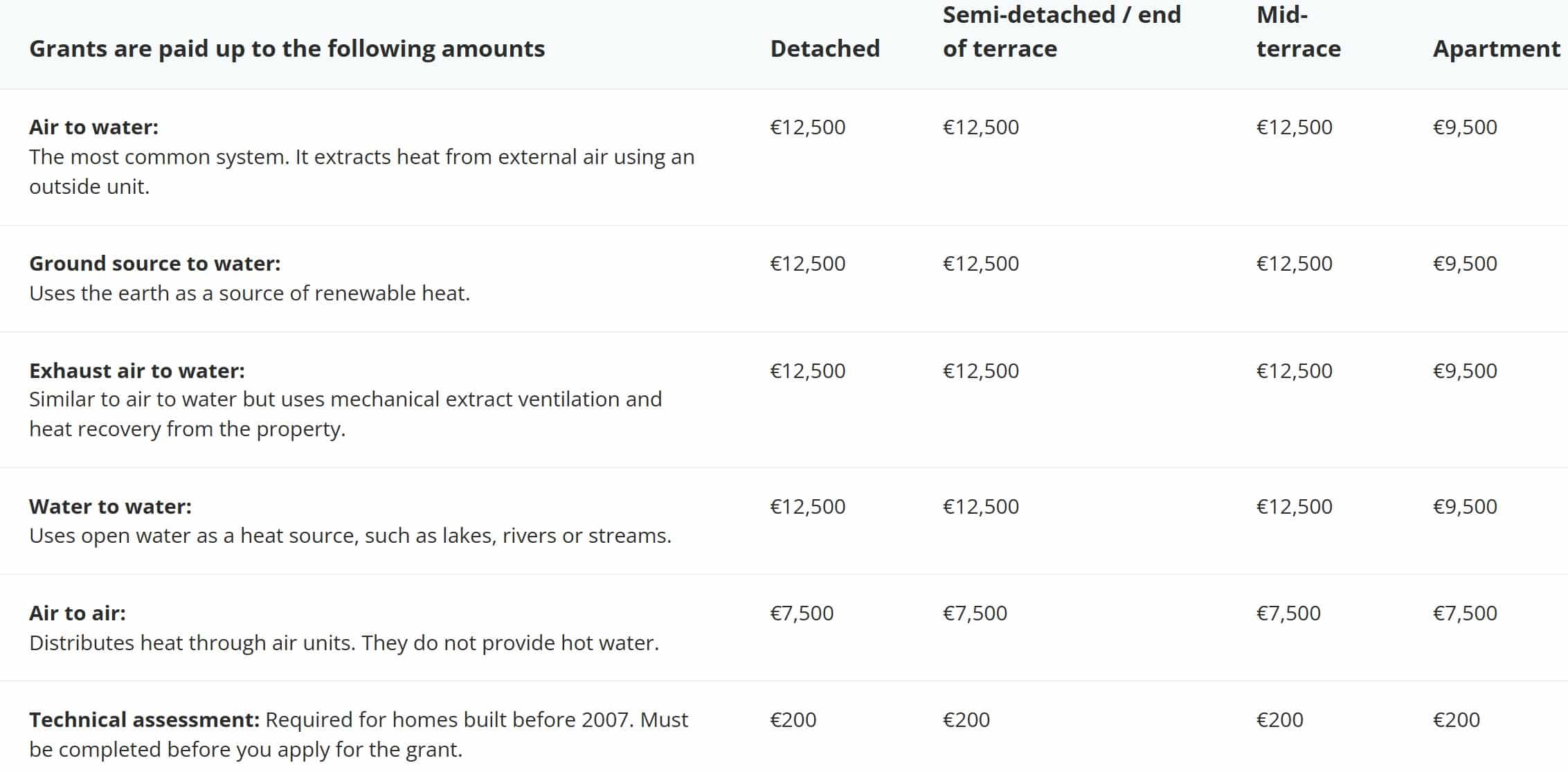
Individual energy upgrades are standalone grants for insulation, solar thermal panels, boiler upgrades and controls, and are available for homes built before 2011. Since 2026, the individual grants also cover windows and up to two external doors. Full grant amounts below:
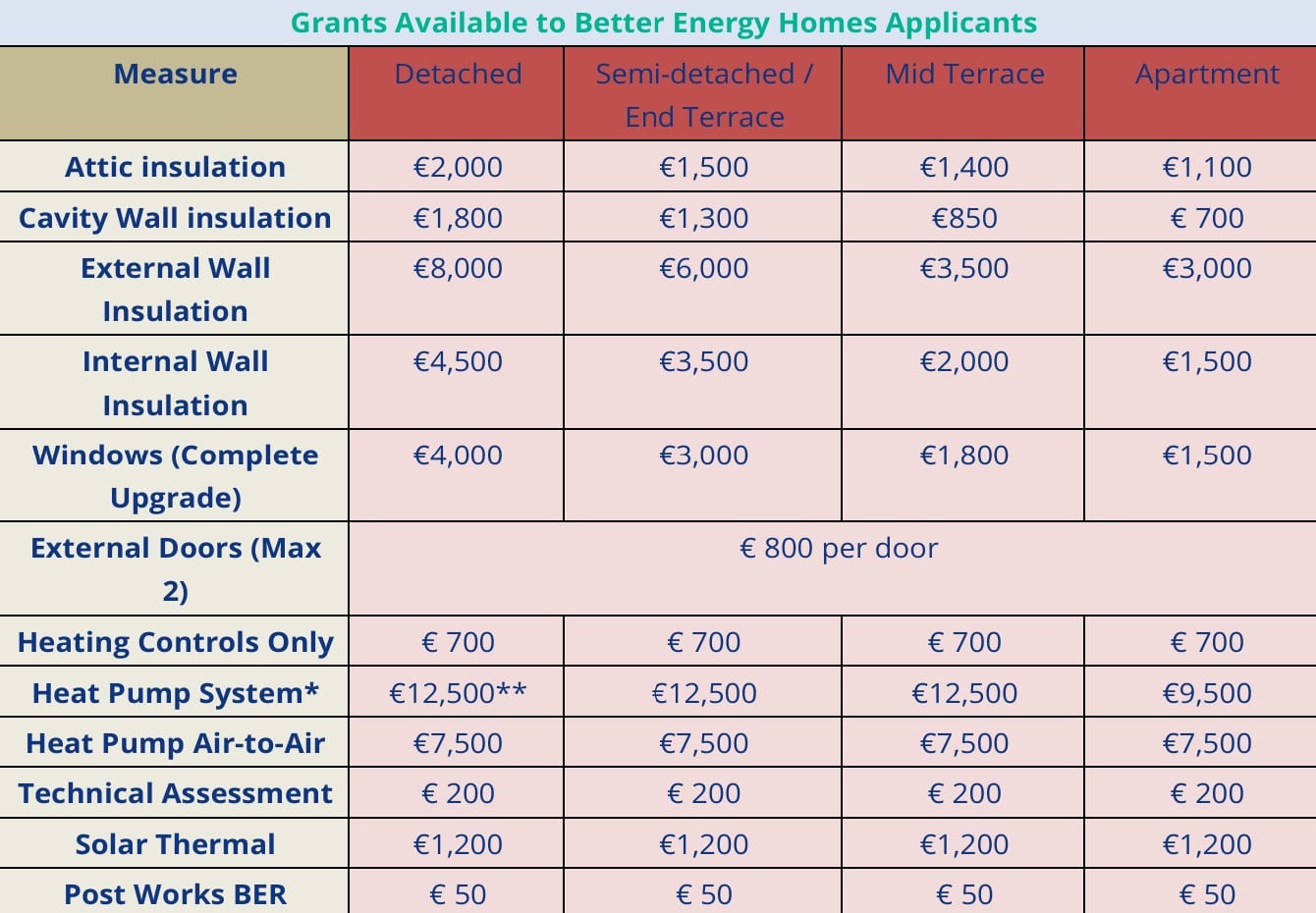
A contribution towards your Building Energy Rating (BER) in the context of the work is also available.
For heat pumps and renewable systems, the house must have been built before 2021. Supports for heat pumps increased in 2026, totalling up to €12,500, including €6,500 towards the heat pump itself, up to €2,000 for necessary central heating upgrades and a €4,000 Renewable Heat Bonus for qualifying homeowners replacing oil, gas, solid fuel or electric storage heating.
Note that grant amounts for solar PV were due to decrease every year but amounts kept steady in 2026, capped at €1,800.
Grant amounts for solar PV are:

Insulation grants increased as of 2026 with a new grant category for first time buyers; the amounts are:
| Pre 2026 | Grant amounts from Feb 2026 | First time buyer grants from Feb 2026 | |
| Attic Insulation – Detached | €1,500 | €2,000 | €2,500 |
| Attic Insulation – Semi-Detached | €1,300 | €1,500 | €1,900 |
| Attic Insulation – Mid-Terrace | €1,200 | €1,400 | €1,800 |
| Attic Insulation – Apartment | €800 | €1,100 | €1,400 |
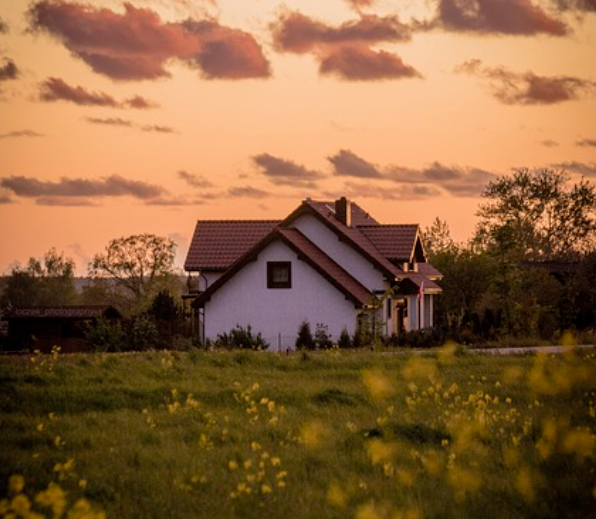
The One Stop Shop grants (National Home Energy Upgrade Scheme) subsidise a whole house energy upgrade, including windows and ventilation system. While there’s more on offer in terms of grant amounts, the overall cost/commitment is greater too. The benefits are that the provider will handle everything for you from start to finish, from grant applications to installation, and you don’t have to pay for the work and get the grant back at the end – the grant is deducted upfront.
In 2025, the SEAI estimated that for a detached house to get from E1 to A2 typically cost €63,837, minus the typical grant amount of €23,700, making the homeowner €38,058 out of pocket. In 2026, the SEAI’s estimate for a detached house to go from D2 to A2 cost €69,577, with a median grant of €23,400 and a median cost to the homeowner of €43,711.
Most utility companies are now offering supports by facilitating or being a One Stop Shop, e.g. Electric Ireland Superhomes. With some even offering loans to get the work done, e.g. Energia’s Cosy Home scheme.
Government-backed low-cost loans are now available for those looking to get an energy upgrade done. You can borrow between €5,000 and €75,000 over a term of up to 10 years, provided the project includes SEAI grant-aided energy upgrades
2. Fully Funded Energy Upgrades
Formerly known as the Warm Homes Scheme, these are free energy upgrades for families receiving government supports such as fuel allowance.
You need to own and live in the property, and the home must have been built and occupied before 2006. The work offered will depend on the results of an SEAI survey.
Since 2026, homeowners receiving qualifying welfare payments can also apply for higher individual grants of up to €2,500 for attic insulation and €2,300 for wall insulation, without losing their place on the Warmer Homes waiting list.
3. Fiscal (tax) incentives
Help to Buy is a tax back scheme is open to first time self-builders and consists of up to €30,000. For a self-build you will need a solicitor to do the paperwork for you and it’s a tax back scheme, so you need to have paid taxes the previous four years. Your house valuation must be €500k or less to qualify, among other criteria.
Help to Buy is available until the end of 2029.
PV panels are now also tax exempt.
4. Shared equity and serviced sites
If you’re building your own house, you may also qualify for the First Home Scheme. This is a shared equity scheme rather in that it can provide up to 30 per cent of the build cost, falling to 20 per cent if you also use Help to Buy. You’ll need a mortgage from a participating lender. You must pay back that share or equity stake.
The Ready to Build scheme provides serviced sites to self-builders. Local authorities are responsible for identifying and servicing the sites, which tend to be in towns and villages and often in clusters. The attraction is that they come at a discounted price of up to €30,000 on market value. You must build a home on the site to use as your main residence. Availability varies between local authorities and there were only 32 serviced sites made available countrywide since the scheme began.
5. Remediation schemes
Financial help is available for some homes affected by defective building materials or construction.
The Defective Concrete Blocks Grant Scheme can provide up to €462,000 towards qualifying remediation works. It applies to eligible homes in designated local authority areas affected by defective concrete blocks.
The Pyrite Remediation Scheme covers qualifying homes damaged by pyritic heave beneath ground-floor slabs.
Eligibility was widened in 2026 to include certain homes with a Damage Condition Rating of 1 where the damage is progressing. The scheme is now in its final phase, with new applications due by November 30, 2026.
6. Vacant Property grants and loans
You can get €50k for a vacant property or €70k for a derelict property to do it up – you can already own the property or be in the process of buying it. Higher grants are available on qualifying offshore islands, with up to €60,000 for a vacant property and €84,000 for a derelict one.
And it can be a renovate-to-rent project; you don’t have to live in it. The property must generally have been vacant for at least two years and built before 2008. The scheme has been extended to 2030. Find out how to apply here. There are loans available to those who apply for these grants too.
A new Vacant Above the Shop Grant was introduced in 2026. It provides up to €95,000 to create one residential unit over a commercial premises, €115,000 for two units and €135,000 for three or more.
The commercial part of the building must remain in commercial use and the upper floor must generally have been vacant for at least two years. An Expert Advice Grant of up to €5,000 is also available towards professional advice for qualifying above-shop projects and the conversion of former commercial or public buildings.
The Repair & Leasing scheme will give you an interest-free loan to repair a home you own that has not been lived in for at least a year – up to €80,000 including VAT (the amount has doubled since last year) – with a view of renting it out to a local authority or approved housing body. The minimum social housing lease term was reduced from 10 years to five years. The loan is paid back over the term of the rental agreement; also if you choose to act as landlord you can pocket more of the rent than if you were to get the local authority to act as landlord.
If you’re buying a vacant or derelict property, you may also be able to use the Local Authority Purchase and Renovation Loan. It’s aimed at eligible buyers who can’t get enough finance from a commercial lender and can cover both the purchase and renovation of a property qualifying for the Vacant Property Refurbishment Grant.
Broader supports are available for vacant properties here.
7. Traditional buildings grants
The Traditional Farm Buildings Grant goes towards the conservation and repair of traditional farm buildings and related structures for farmers in the Green Low-Carbon Agri-Environment Scheme (GLAS). Maximum grant amount is now €30,000; up to 75 per cent of the cost can be financed subject to the maximum grant amount. Grant amounts can be as low as €4,000 depending on the project.
A thatching grant is available towards the cost of renovating thatched roofs of owner occupied houses. The grant got a major boost this year, and has gone from a maximum of €3,810 being available to €20,000 being available in the 2027 round of applications.
Harder to get is the grant from the Historic Structures Fund, which is designed for large protected structures that need major urgent repairs.
A tax relief may be available too (Section 482).
8. Adapting to changing needs grants
These are means tested. There’s the Housing Adaptation Grant for People with a Disability with a maximum grant amount of €40,000 covering up to 100 per cent of the approved costs, an increase of €10k over the past year.
The Housing Aid for Older People offers a maximum grant of €10,700, (also increased from last year and 100 per cent of the approved costs can be covered too). The Mobility Aids Grant with a cap of €8,000 (increased by €2k) is for things like ramps, accessible showers and stair lifts.
9. Water and wastewater grants
Fully funded grants, or up to €5,000 whichever is lower, are available to replace old lead pipes.
Also available are a grants to replace your septic tank after failing an inspection. These grants have increased significantly and you can now get up to €12,000. In practice, this grant is very hard to get.
If your home relies on a private well, grants are available through your local authority. You can get 85 per cent of approved costs, up to €3,000, to improve an existing well, or 85 per cent up to €5,000 towards a new well where the local authority agrees this is the best option. Water treatment measures such as filtration or UV treatment can be funded at 100 per cent, up to €1,000.
10. Microgeneration incentives
As seen above, PV panels have no VAT applied, provided the supply and installation are part of the same contract. If you buy the panels separately, the standard VAT rate still applies.
You can also get paid for the electricity you export under the Microgeneration Support Scheme (MSS) plus a tax break on what you earn form ituntil December 31, 2028.
Northern Ireland
As in Ireland, there is limited grant support specifically for new builds. New builds and new extensions are not eligible for funding under the current Northern Ireland Sustainable Energy Programme (NISEP).
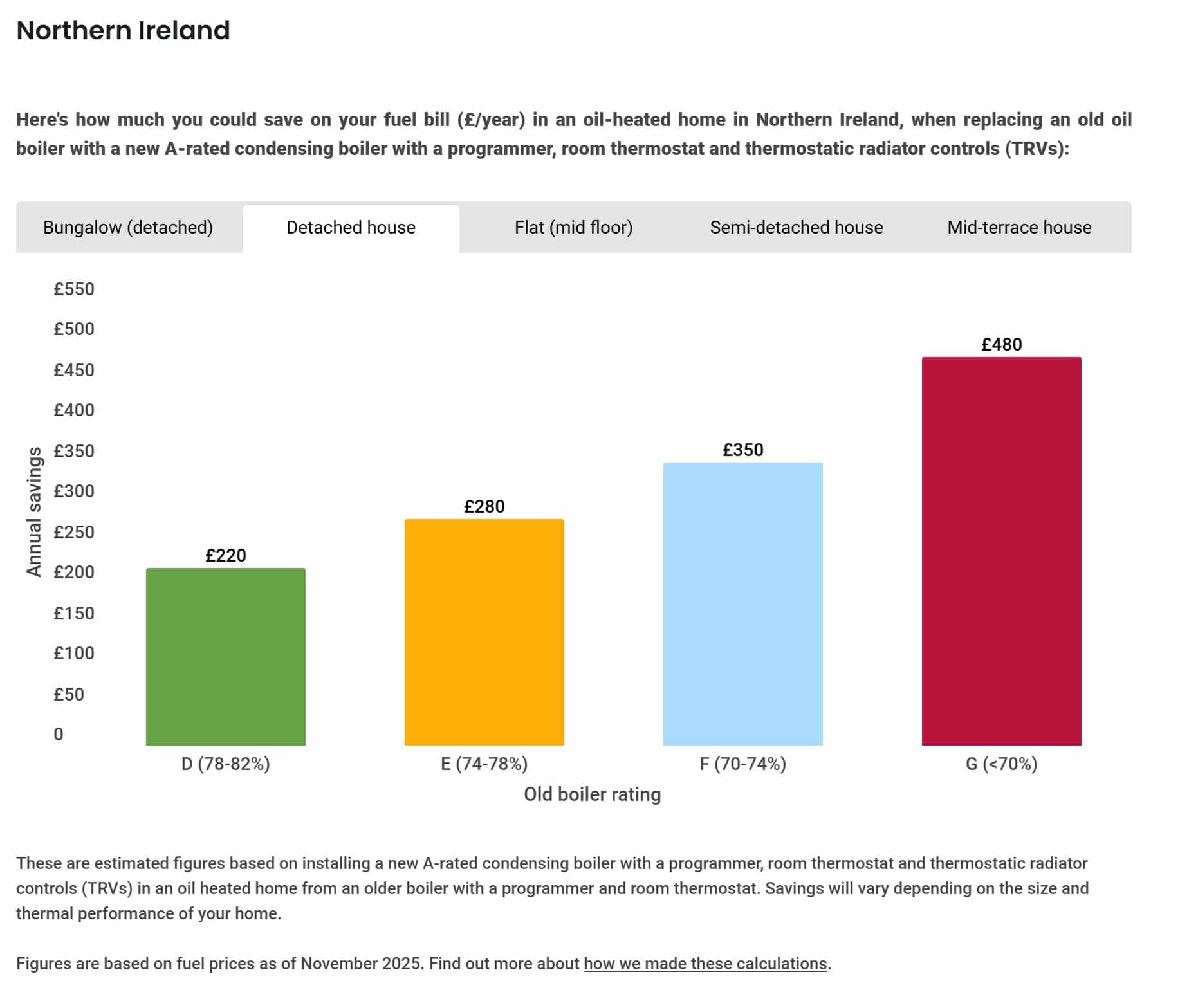
Savings to be made in NI with replacing a boiler are available from the Energy Savings Trust, as below:
1. Microgeneration incentives
There is currently a zero rate of VAT on the supply and installation of qualifying energy-saving materials in residential properties in Northern Ireland. This includes solar panels, batteries, insulation and heat pumps.
The temporary zero rate runs until March 31, 2027, after which it’s currently due to return to 5 per cent.
The Northern Ireland Renewables Obligation Certificates (NIROCs) scheme was closed in April 2017 so there is no longer a financial incentive from the government to generate your own electricity from solar (photovoltaic – PV) or wind.
However you can still get paid for the energy you export to the grid with what’s referred to as an export payment; you must have an NIE Networks import / export meter fitted to allow you to do this. Export payments from Power NI have fallen since the last period from 10.32 p/kWh which was valid until September 30, 2025 to the current rate of 9.64p/kWh in place until September 30,2026. In 2024 the rate was 14.22 p/kWh.
Great Britain has a different regime; there the Smart Export Guarantee replaced the now defunct feed-in tariff system. The Smart Export Guarantee is GB only so does not apply to Northern Ireland.
2. Tax rebates
New builds in NI are exempt from paying VAT. You must apply for the VAT back at the end of your build, having kept every receipt. This zero VAT rate is available to self-builders (new builds); you must apply through HMRC’s DIY Home Builders Scheme. For homes completed on or after December 5, 2023, you normally have six months from completion to submit your claim, and you can only make one claim.
You can also get the VAT back on conversions and change of use where the property has not been occupied for 10 years. Homes that have not been lived in for at least two years prior to works commencing qualify for the reduced VAT rate of 5 per cent; useful FAQ here.
The zero VAT rate also applies to work done for someone with a disability or terminal illness.
The reduced rate VAT of 5 per cent applies to mobility aids, heating and security work for people over 60.
3. Oil buying club
Group with your neighbours to get a better deal from oil suppliers to fill your tank. More information on the NI Oil Buying Network is available from the Consumer Council.
4. Historic buildings grants
The National Lottery Grants for Heritage which can fund repairs and conservation works, is a well established funding stream for projects of all sizes.
The Historic Environment Fund from the Department of Communities is mostly focused on essential repairs to roofs and windows, with priority given to thatched buildings, buildings on the HARNI Register, and buildings with owners on eligible benefits. You can get £6,000 per roof (£12,000 for thatch). The Scheduled Monument Regeneration Stream provides £2,000 to help historic monument owners carry out minor works.
Loans are available from the Architectural Heritage Fund’s Heritage Impact Fund, among other funding streams.
The Ulster Architectural Heritage has published a helpful guide with tips and an update as to where to secure grants if you own a historic building. See below for the full guide:
5. Low income schemes
There are a number of grants available for houses in a lot of need of repair, but these tend to be very hard to get.
For those with mobility or disability issues there’s the Disabled Facilities Grant which could see all of the works recommended by an Occupational Therapist funded (typically up to £35,000, absolute max of £70,000). To get this grant, you must qualify for the Replacement Grant, which is only available to those living in a rural area and whose home is both unfit to live in and where repair is not an option.
For those on a total annual gross income of less than £23,000, there is the Affordable Warmth Scheme, run by the NI Energy Advice Service (NIEAS) – tel 0800 111 44 55, email: [email protected].
Bryson Energy in partnership with Belfast City Council runs a handyman service for the elderly. More here.
There are additional grants available through the Utility Regulator’s Northern Ireland Sustainable Energy Programme. Details for the schemes in operation until March 2027 are below:
Many of these measures are fully funded, including to upgrade to an efficient heating system and to carry out insulation upgrades. Note that these are only open to those on a low income, i.e. single person household with income / pension less than £28,000 before tax or couple / single parent family with an income / pension less than £35,000 before tax.
Disclaimer: This list is not exhaustive, always consult with a qualified building professional. Schemes are subject to change.
Last update: September 2026