Over recent years the cost of generating electricity from our homes has fallen and for many, solar panels are a way of making their homes ‘greener’. Here’s what you need to know about them.
In this article we cover:
- The cost of installing solar panels and how long they take to pay for themselves
- Whether battery storage is worth the extra expense
- Roof space, orientation and shading requirements
- Efficiency, lifespan and maintenance of solar systems
- The environmental pros and cons of solar panels
Costs and Payback
Although costs are falling, solar panels that generate electricity are not a cheap addition to your home. The average cost in Ireland is between €5,000 and €9,000. This includes installation and materials such as roof mounts and inverters. To mitigate costs, there are grants available (see page 112) in ROI. Battery costs vary according to how many of them you need or want but add substantially to the price.
On average, solar panels usually take between seven and 10 years to pay for themselves. The payback time can be lower depending on the set-up. Indeed, depending on your lifestyle and how this matches with the ’free’ electricity you are generating, and how much you can sell back to the grid, storing excess power will be costly.
Ideally, you should work from home and consume all your electricity as it is generated (on sunny days) or install smart plugs to automatically turn on appliances when generation is high.
Solar batteries tend to cost about €4,000/£4,500, and a large home can easily spend twice this. The cost of batteries depends on their capacity, chemical composition and their lifecycle.
But however you do it, adding battery storage is expensive and adds significantly to the payback time for the whole system. Once you do have the batteries you can reap the maximum rewards by using them to charge your EV overnight, run your washing machine, and so on.
Space Requirements and Orientation
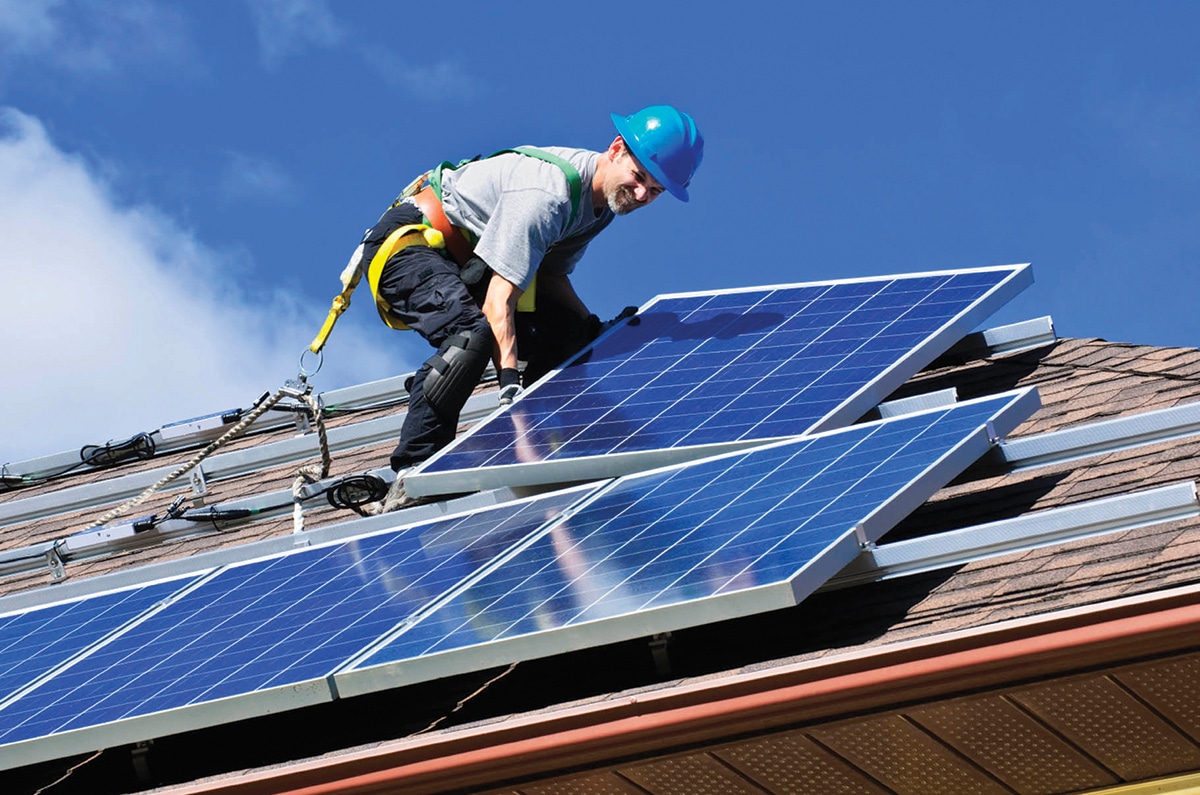
Given each panel takes up about two square metres and you’ll need many of them, you’ll need room on your roof to accommodate them. And the roof will have to be well enough built to take their weight. Solar companies who will quote for the project will come to your house to check how easy it will be to install your panels.
As the person who is visiting is essentially trained in sales, make sure to highlight any concerns, e.g. type of roof covering or roof strength, and have those elements reflected on the quote. It’s sensible to have a surveyor look at your roof’s structure before even talking to a solar company. S/he will be able to tell you if the roof will take the load and advise what to do if you have very old tiles.
Ideally, the panels need to be installed on a surface facing south. But west- or east-facing will still produce some electricity, depending on where you are in the electricity; in fact a combination of east-west Lifespan panels can be an effective solution. Many people don’t want panels on the front roof of their house because of the appearance but this may be the only surface that has exposure to enough light to be effective.
A way around this can be to use a flat surface such as a garage roof, or have them on the ground, but this can cost more and may produce a lower output. On that point, solar panels don’t cope well with shading. Whilst you’ll get some power from your panels at any time of day, even when the sun isn’t shining, they don’t like shade. This is why your solar panels will be positioned so that they are completely clear of shadows between the hours of 10:00 and 16:00. This can be restricting, especially if there are neighbouring buildings or large trees.

Efficiency
Despite major advances, solar panels are inefficient when compared to other energy sources. The best achieves only about 23 per cent efficiency.
Technological advances will increase this over the coming years. Note that solar panels produce power best when there is plenty of light, although any daylight will produce some power. This means that with cloudy weather and, of course, during the night, their output falls.
Lifespan
Although it is claimed that many solar panels last for 25 to 30 years, it is hard to know how realistic this is as the tech behind them is constantly changing and, by definition, no modern panels have been around for ‘more than 30 years’.
You’ll find that manufacturers will say the panels will produce 80 per cent of their yield in 25 years, and that what will need replacing every 10 to 15 years is your inverter. Only the best systems will perform to these standards so make sure you go with a trusted supplier.
Ideally, the panels need to be installed on a surface facing south. But west or east-facing will still produce some electricity…
Environmental Credentials
It’s easy to feel a bit smug when buying PV panels. But things are not what they appear. OK, they’re ‘green’ at the point of use, like an electric vehicle, but the journey from where they’re produced, usually China, to your home in Ireland is a long and environmentally unfriendly one.
There’s the embodied carbon from transport. And the materials used, many of which are not sustainable, together with the manufacturing processes and the wastage, are all far from ‘green’.
Disposal is also an issue. Recycling a PV panel costs 20 times that of putting it into landfill. It is very hard to separate the valuable components, and even then they don’t have a high value. And the methods for recycling these panels are still in their infancy.
Solar panels are indeed green in the sense that you are reducing your reliance on the grid and producing your own electricity. To boost your green credentials, therefore, invest in a good quality system that is as efficient as possible and that will last as long as possible.
Maintenance
There is an upside to all the rain we get in Ireland; it naturally washes the panels.
However, over time, dirt will still build up and the likes of bird droppings will require a rinse from time to time to ensure optimal output. If this is required, contact your installer to do it (going up on the roof requires specialist equipment; falls from a height are the main cause of deaths and injury on construction sites). Coastal areas (salt spray) may require more frequent cleaning.
Another benefit of solar panels is that the system will come with an app which will alert you to performance issues