In this article we cover:
- How the new rules are different to the situation today
- Social need: how remote workers will be able to qualify
- Economic need: more professions taken into account
- Which rural areas will be exempt from local needs (social or economic) provisions
- Housing need: how it will work from now on
- Special provisions for the Gaeltacht areas
- The end of blanket road frontage and ribbon development caps
- Safeguards to ensure sustainable development
- What happens next before the rules change
Those wishing to return to their rural area to build a family home are set to benefit from the government’s plan to cut red tape and overhaul how one-off homes are granted planning permission in the Irish countryside.
Those who wish to build a home within a close distance to where they grew up, or close to where they work, will be granted planning permission once the Draft National Planning Statement comes into force.
That is, as long as they meet all other planning criteria and if they haven’t already built a home in that locality.
An applicant may own or have owned a house elsewhere, but the new rural house must be their first build in that particular rural area, except in limited health or personal circumstances.
The new guidelines, which will replace the 2005 Sustainable Rural Housing Development Guidelines, are allowing people who have lived in a rural area, no matter how long ago that was, to get planning permission to build a home.
As previously reported by Selfbuild, the government had signalled plans to overhaul the 2005 rural housing rules for well over a decade – the rules many one-off rural self-builders have struggled with when trying to get planning permission on family land or in their local area.

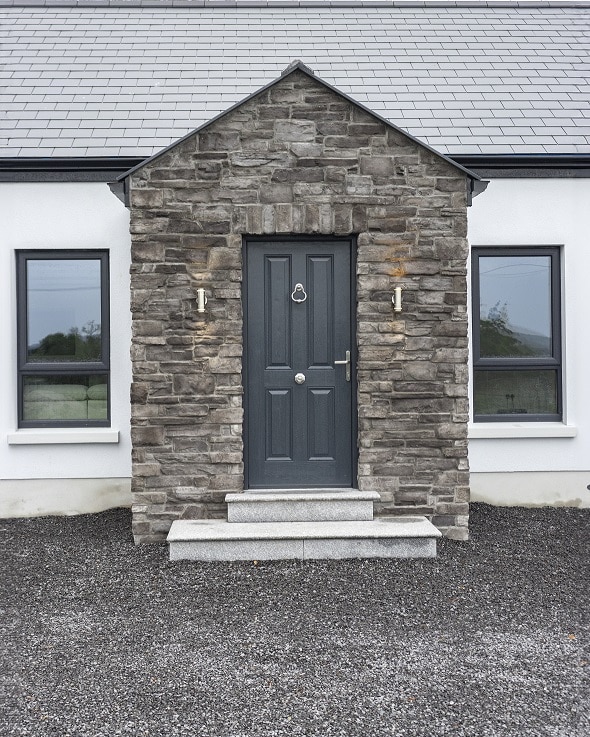
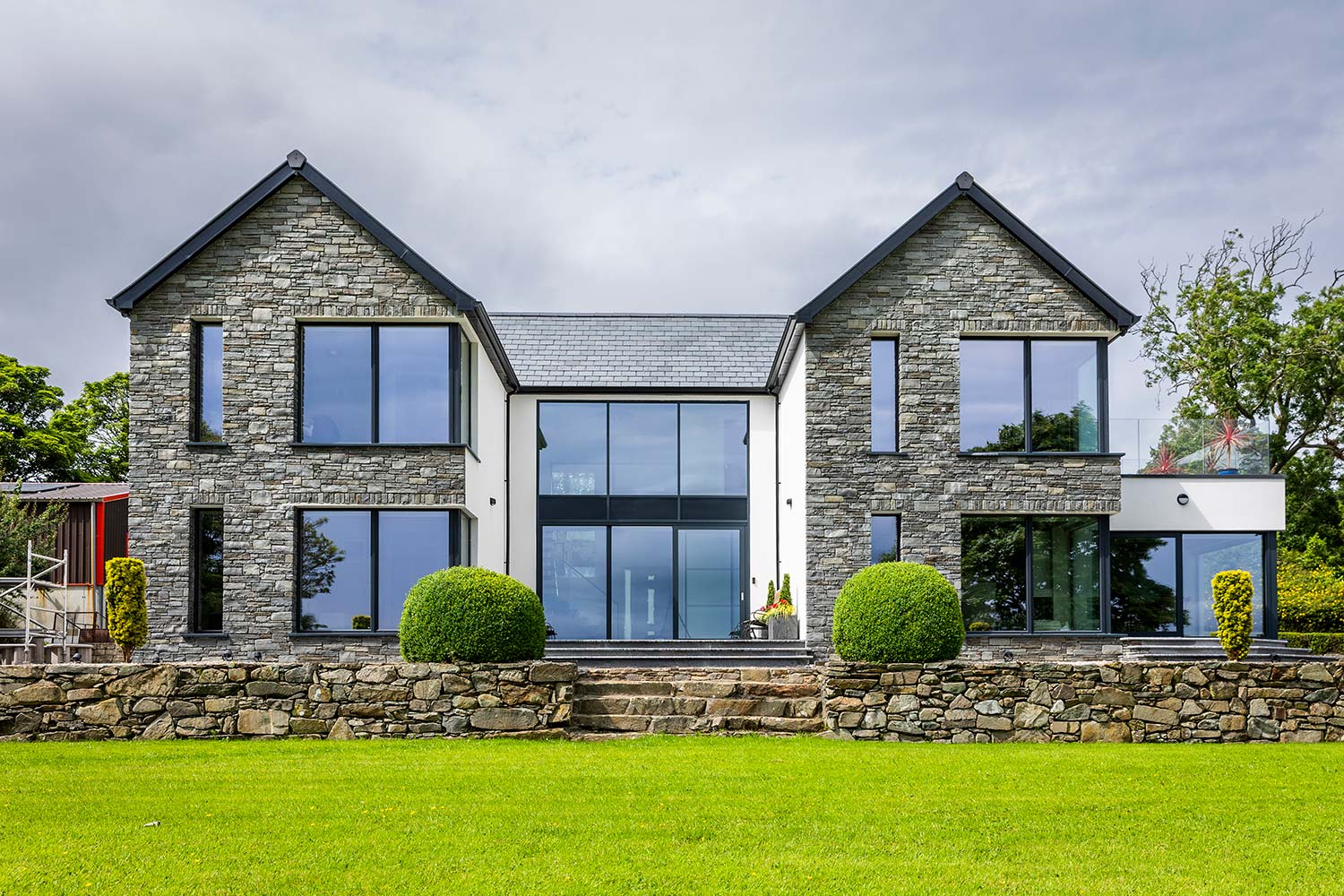
At the home of Kevin and Sarah Sweeney, pictured with family in Co Louth, where the draft National Planning Statement press conference took place, with Minister for Housing Local Government and Heritage James Browne and Minister of State for Local Government and Planning John Cummins.
Consistency across local authorities
Minister for Housing, Local Government and Heritage James Browne said the new statement would replace the current guidelines with “a clearer, more consistent national approach” to rural and Gaeltacht housing, ending the ‘Eircode lottery’ system currently in place.
The minister for housing says his motivation is to clarify the rules of who can and who can’t build in specific rural areas and to ensure they are the same across the country.
At the moment each local authority has its own set of rules and conditions. In many local councils you have to demonstrate both a social and an economic need, alongside a housing need. In sensitive areas you will need to demonstrate a social or an economic need, not both.
Some councils will require it be your first home, others require it be your first build. With the new guidelines, neither of those requirements will apply.
“We are removing arbitrary and prescriptive local rules and ensuring each application is assessed fairly on its merits,” said Minister for housing James Browne.
“Crucially, this will end the current Eircode lottery where a house may be permitted in one part of the country while down the road in a neighbouring county, permission would be denied for the exact same development.”
“The Statement strikes the right balance between supporting rural communities, ensuring vibrant rural towns and villages and protecting the character and sustainability of our countryside.”
Minister of State with responsibility for Planning John Cummins said the aim was to give more certainty both to applicants and planners: “This is about giving certainty both to planners and people who wish to remain living in, or return to their rural communities, while supporting a vibrant, sustainable rural Ireland.”
What you need to prove to build in the countryside
All planning applications will continue to have to meet all planning criteria, such as site location, design, access, wastewater treatment, and environmental impact.
What the new guidelines are doing is redefining the topics of local need and housing need in rural areas.
Local need rules will no longer apply within rural settlements of less than 1,500 people. Although the local need rules will continue to apply in sensitive areas, they will be simplified and loosened, namely in high amenity areas where councils need to protect landscape character or manage holiday home pressure.
The local need criteria in those sensitive areas can be either social or economic, and the housing need criteria will continue to apply.
All of these criteria have been amended to make it easier for people to get planning permission to build in the area they’re from or in the area they’re working in.
Social need
You can apply for planning permission on the basis of social need, which can be demonstrated by showing you have lived within a three to 10-kilometre radius of where you plan to build for at least seven to 10 years, depending on what area you are in.
This social need is enough to form the basis of your planning application, as long as all other criteria are met such as siting, design, access, wastewater and environmental impact.
That means those working from home can be granted planning permission as long as they meet the social need criteria.
The changes are specifically about how close to the site a person must live or work, and for how long they must have done so, in order to qualify for planning approval, again as long as all other planning criteria are adhered to as well.
In rural areas under urban influence, applicants will have to show a local social or economic need within a 10km radius of the site over seven years.
In areas under stronger pressure, such as metropolitan areas and green belts, a tighter 3km and 10-year test will apply.
Gaeltacht
The draft National Planning Statement also includes new guidance for housing in Gaeltacht areas, including language criteria for new single rural houses and housing in Gaeltacht settlements.
The social need test in the Gaeltacht is at 3km and 10 years. However, where a nominated adult member of the household can show a tested level of spoken Irish, the 10-year requirement is reduced to five years where the proposal would have a positive linguistic impact.
Minister for Rural and Community Development and the Gaeltacht Dara Calleary said the draft policy would strengthen support for the Irish language in Gaeltacht areas.
“The draft policy strengthens the planning system’s support for the Irish language in Gaeltacht areas, making it clearer and more consistent by setting out the language criteria, which may be submitted with applications for new single rural dwellings and requiring a proportion of multi-unit developments to be lived in by Irish speakers.”
“Importantly, the policy also recognises that Gaeltacht communities share a specific culture, language and identity. It introduces the idea of ‘Inter-Gaeltacht Recognition’, meaning Irish speakers who live and work in one Gaeltacht can use that to show they meet local need requirements in another Gaeltacht.”

Economic need
If the area you plan to build in is sensitive, in that it requires you show you have a local need, and you cannot prove a social need, then you can demonstrate you have an economic need.
Economic need can be that you work in farming, as is the case currently. The new rules include more professions, such as school teachers or gardaí.
In fact the new draft statement recognises that a range of rural businesses and occupations may be tied to a rural area.
However, it also states that remote working, on its own, is not be enough to prove an economic need to build in the countryside.
Housing need
Currently those trying to build on family land are often being told they cannot because they already own a home somewhere else, and as such have no housing need.
Under the new rules, as long as you have not already built a house near where you grew up or have been living or have a business in, you will be granted planning permission (as long as the other planning requirements are adhered to).
This regardless of whether you already own, or have built, a home elsewhere.
Ribbon development
On ribbon development, the draft says applications should be judged on their merits rather than using fixed rules such as “no more than five houses in a row” or minimum frontage requirements.
It also says infill and backland development should be supported where services and access already exist, provided it does not block future infrastructure or settlement expansion.
Safeguards
The Office of the Planning Regulator will ensure each local authority’s county development plans are brought in line with the new regulations. The OPR has enforcement powers.
As announced recently, county development plans are also being streamlined and homogenised.
To ensure the new rules don’t lead to a build-to-sell situation, there is also a proposed 10-year occupancy condition. In other words, where permission is granted on the basis of local need, the applicant would have to live in the house as their permanent and primary residence for at least 10 years. Short-term letting would be excluded.
The minister said local authorities have enforcement powers if these rules aren’t adhered to.


Paperwork
The draft lists the sort of paperwork self-builders may need, including ID, proof of current and previous residence, land ownership documents, planning history, evidence of local connection such as school records or letters from community organisations, evidence of rural employment or enterprise, farm records where relevant, distance from the site to the local connection or employment, declarations about previous house ownership or rural permissions and possibly a sworn affidavit.
What happens next
The draft National Planning Statement must now be assessed under the relevant EU Environmental Directives, with an associated public consultation, before it can receive final government approval. It will then be issued by the Minister for Housing, Local Government and Heritage under Section 25 of the Planning and Development Act 2024.
The new rules should be in force by the end of this year, and local authorities have been put ‘on notice’ to update their plans in a timely manner.
Minister for Housing James Browne: “We’ve got government agreement [and the draft] will now go out to environmental screening and that will take a number of months, somewhere between about two and six months would be the estimate, and it’ll then come back to government for final approval.”
“When it gets final approval it will then become national law then every local authority will have to apply the national planning statement. In the meantime they need to start looking at their maps to ensure that they are in compliance. If they need to make variations to their county development plans they will have to do that, but that will not hold up the application of this national planning statement to those areas.”
Minister of State with responsibility for Planning John Cummins: “It’ll be the end of the year for the screening to be in place and the local authorities under the new planning and development act and the changes that are coming forward in the next couple of weeks, they have three months to ensure that their development plans are consistent but as Minister Browne rightly points out the national planning statement stands for itself but local authorities will obviously have to align their development plans with it, within three months.”
Minister for Rural and Community Development and the Gaeltacht Dara Calleary said of the local authorities: “They’re on notice now, they need to start doing the work now.”
Until the final National Planning Statement is approved and issued, the Sustainable Rural Housing Guidelines for Planning Authorities, 2005 remain in effect.