In this article we cover:
- Co Mayo project with two cottages to landscape
- Seating areas and retaining original features
- Creating a flow with paths and steps
- Tree planting and flower choices for local conditions
- Top tips for garden design
- Garden plan


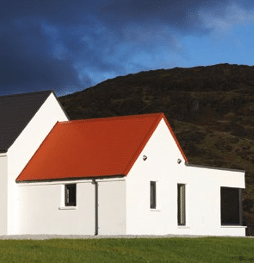
This garden design project is for a particularly attractive property – a pair of incredibly pretty 19th century cottages, newly restored and renovated.
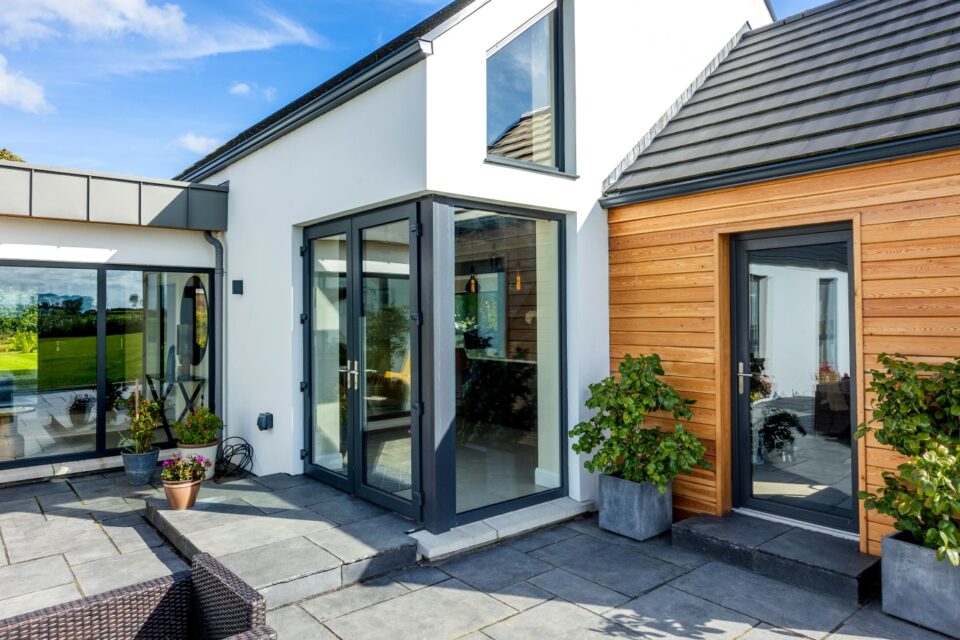
One cottage would have been originally built to house the people who lived on the land and the other may have originally been used for animals but has been beautifully finished resulting in two living spaces with just a few steps between them.
They are nestled into a Co Mayo hillside, on a sloping site with countryside visible around and below, and a small stream running very close by. Most of the soil is damp and boggy, particularly so at the lower end, and it makes more sense when the site is large, as this one is, to work with that rather than try to fight against nature.
There was already an extensive pebbled space around the cottages, connecting to the parking space and driveway, with plenty of room to sit, but an informal seating area was needed towards the end of the lawn in order to catch the evening sun.
The challenge was to create a garden that sits well visually with the period buildings but retains interest for as much of the year as possible, while keeping maintenance to a minimum.
Fruit trees and bushes were to be incorporated in a nod to the original inhabitants’ way of life which would have depended on what they could produce from the land.


Drystone walls
Some very old drystone walls remain on the site, and although they no longer have a definitive purpose, it was decided to retain them as they have lots of character and are built from the local stone, weathered from years of exposure to the elements.
The new informal seating area was tucked inside one of the old walls, allowing the stone to act as a backdrop for planting, and containing plants that will be happy in damp soil.
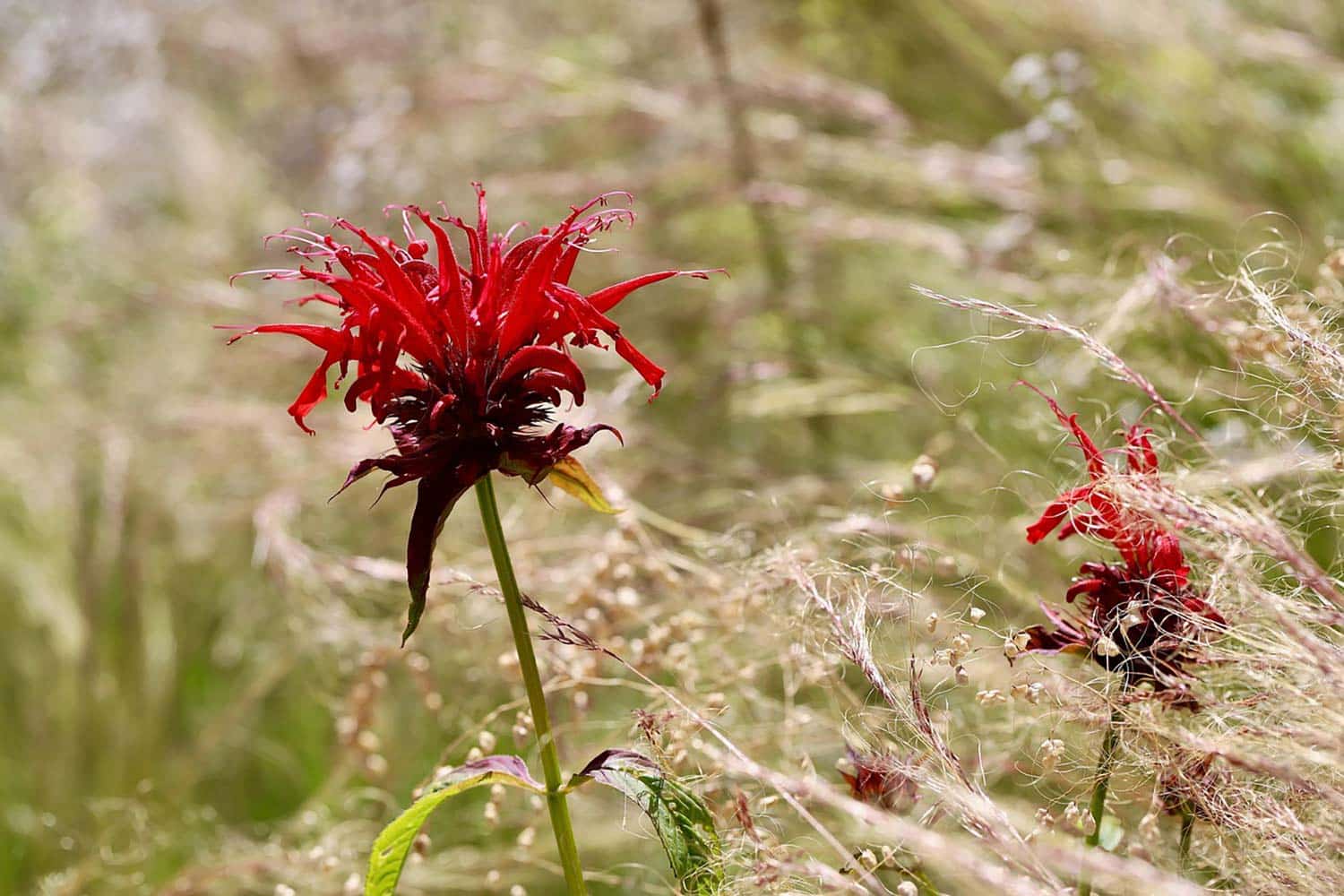
Iris sibirica, monarda and thalictrum are perfect here, alongside Bergenia for their glossy, dependable evergreen foliage.
A rustic timber arch allows a rambler rose to scramble upwards, fitting well with the period property but needing less maintenance than a climbing rose would.
Passageways
The evening patio is linked to the cottages with a curving path and some broad, shallow steps – pebble or self-binding gravel are both appropriate for this informal, rustic arrangement. Placing another archway and rambler rose at the top of the steps creates a -‘doorway’- through which the path invites you on a journey through the rest of the garden.
An extensive garden like this one can often fit more than one seating area – and indeed several are planned for this garden eventually, with a wildflower meadow and a bench seat in the upper part of the site alongside the driveway.
If you’re going to create a paved seating area that’s some distance away from the house, however, it’s important to consider access to and from it. It’s easy to overlook this, but if you don’t make it easy to access, it can end up not being used as often as it might, and I often come across spaces that don’t get used enough because of lack of thought at the design stage.
Your access, whether that’s a path or steps or both, needs to be comfortable and safe to use, as well as being in the right place at both ends.


Tree Planting
There are plenty of trees surrounding this site but those inside the garden are mostly ash and unfortunately are likely to succumb sooner or later to the ash dieback disease, so adding new trees is a must at this stage.
Willow and alder are planted in groups towards the lower end of the garden – both are native and grow vigorously, adding presence relatively quickly, and both are very happy in damp and wet soil.
The fruit trees and bushes are located nearer to the parking area, where it’s slightly less damp, with spring bulbs naturalised underneath the trees. This makes for a lovely ‘welcome home’ as the blossom and fruit appear but also keeps them in a handy spot for keeping an eye on them while coming and going.
A group of silver birches in the curve of the driveway with a planted border at the cottage end makes for an interesting and colourful journey to and from these unusual and intriguing twin cottages.
Anne’s tips
Work with nature
If your soil is ‘challenging’, for instance very dry and stony or very damp and boggy, working alongside it makes more sense than trying to fight against nature.
Make the garden features easy to access
Always consider access to features further away from the house, so that they are not left -‘stranded’- and seldom visited.
Mix styles
With a period property, planting doesn’t have to be a cottage garden pastiche, it can have a modern feel while still being sympathetic to the character and surroundings.