The most successful kitchens usually combine several lighting styles, with each one serving a different purpose. Here are some of the main types of kitchen lighting and how they can improve the look and feel of your space.
In this article we cover:
- Recessed ceiling spotlights
- Pendant lights
- Under-cabinet lighting
- Plinth lighting
- Cabinet lighting
- Wall lights
- Track lighting
- Statement lighting
Recessed ceiling spotlights
Recessed spotlights are fitted directly into the ceiling and provide clear, even illumination across the kitchen.
They are particularly suited to modern and minimalist spaces because they sit almost flush with the ceiling and do not interrupt the overall design.
Spotlights can make a kitchen feel brighter and more open, especially when they are positioned around walkways, worktops and storage areas. Avoid placing them in a rigid grid without considering the kitchen layout, as this can leave important areas in shadow.

Pendant lights
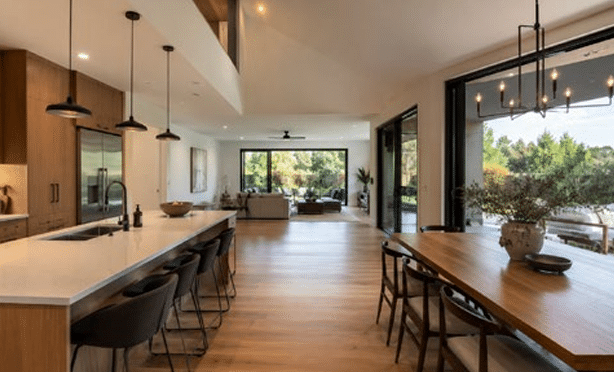
Pendant lights hang from the ceiling and are commonly positioned over kitchen islands, breakfast bars and dining tables.
They help define a specific area within the room, making them especially useful in an open-plan kitchen. A row of matching pendants can emphasise the length of an island, while one oversized fitting can create a dramatic focal point.
Glass pendants allow light to spread throughout the room, while metal or opaque shades direct light downwards and create a more intimate atmosphere.

Under-cabinet lighting
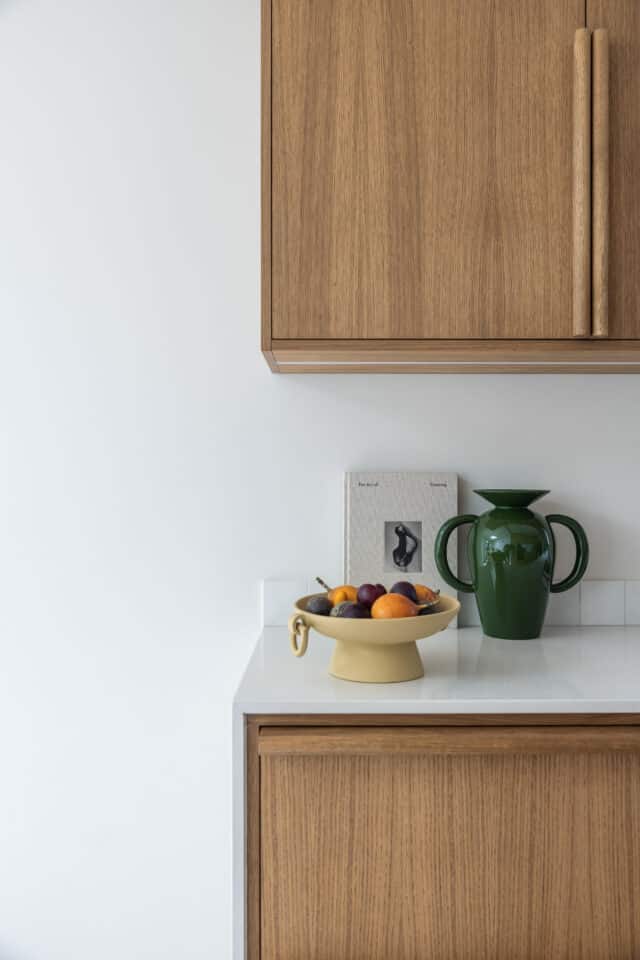
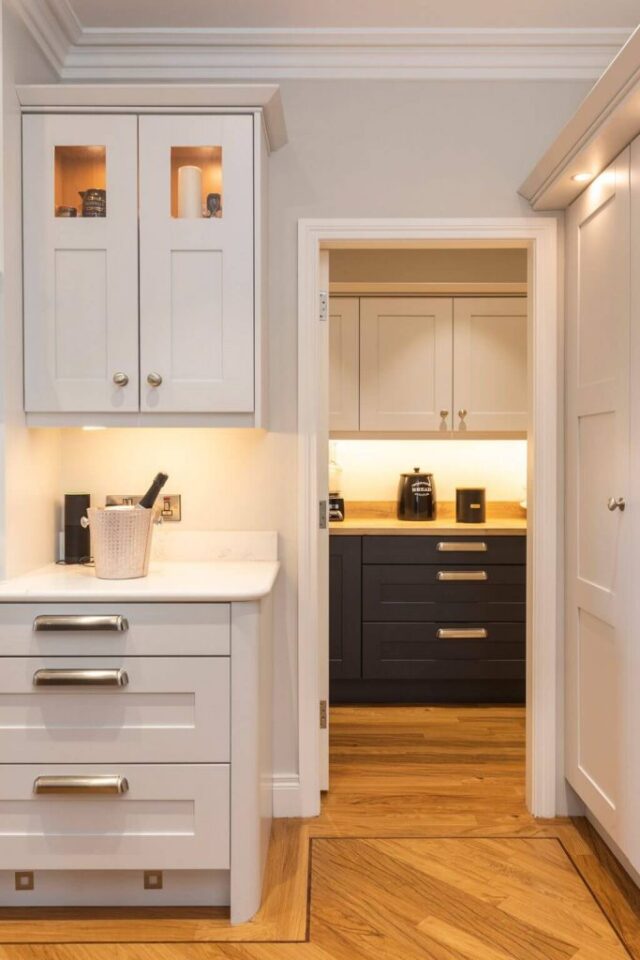
Under-cabinet lights are installed beneath wall units to illuminate the worktop below.
They are one of the most practical forms of kitchen lighting because overhead lights can cast shadows when you are standing at the counter. LED strips provide a continuous line of light and give the kitchen a clean, streamlined appearance.
They can also highlight splashbacks, stone worktops and decorative finishes, helping the kitchen feel more polished and complete.

Plinth lighting
Plinth lighting is positioned along the base of kitchen cabinets, close to floor level.
This type of lighting creates the illusion that the cabinets are floating, which can make the kitchen feel more spacious. It works particularly well in contemporary kitchens with handleless units and clean lines.
Plinth lights can also provide gentle low-level illumination in the evening, allowing you to move around the room without switching on the main ceiling lights.

Cabinet lighting
Cabinet lighting can be installed inside glazed units, open shelves, drawers or pantry cupboards.
Inside glass-fronted cabinets, it turns crockery, glassware and decorative items into a feature. Lighting inside drawers and cupboards has a more practical purpose, making it easier to find ingredients, utensils and kitchen equipment.
Cabinet lighting also adds depth to the room. When used in the evening, it creates a softer atmosphere and prevents the kitchen from feeling overly bright.

Wall lights
Wall lights can add character and warmth to a kitchen, particularly around sinks, open shelving, dining areas or breakfast nooks.
They provide a softer alternative to ceiling lighting and can help make the kitchen feel more like a living space. This is especially useful in open-plan homes where the kitchen connects directly with a dining or seating area.
Traditional wall lights work well in country-style kitchens, while simple metal or globe-shaped fittings suit more contemporary interiors.

Statement lighting
Statement lighting is designed to attract attention and become a decorative feature within the kitchen.
This could include a sculptural pendant, an oversized chandelier or a cluster of lights hung at different heights. It can add personality to a neutral kitchen and help draw attention to an island, dining table or high ceiling.
The fitting should suit the proportions of the space. A very small light can become lost in a large kitchen, while an oversized fitting may overpower a compact room.

Natural light
Natural light should also be considered as part of the overall kitchen lighting plan.
Windows, rooflights and glazed doors can make the room feel brighter, larger and more connected to the outdoors. Rooflights are particularly effective in extensions or deep-plan kitchens, where daylight may not reach the centre of the room.
Reflective finishes, pale colours and carefully positioned mirrors can help natural light travel further through the space.

Layer the lighting
No single type of lighting will meet every need. Ceiling lights may provide general brightness, while under-cabinet lighting improves visibility and pendant lights add atmosphere.
Where possible, place different lighting types on separate switches or dimmers. This allows you to use bright task lighting while cooking and switch to softer cabinet, wall or pendant lighting when eating or entertaining.
By combining several lighting styles, you can create a kitchen that feels practical during the day and warm and welcoming in the evening.