In this article, we cover:
- What you can now build without planning permission
- The new limits for extensions and garden rooms
- How to split one home into two
- The rules for a back-garden dwelling
- What homeowners still need to check before building
- The tax questions and concerns raised by Threshold
From today, homeowners can carry out more work on their properties without having to apply for planning permission with the Exempted Development Regulations for Residential Dwellings taking effect.
The new rules allow for slightly larger extensions, bigger garden rooms and home offices, and new exemptions for dormers, rooflights and external insulation. In some cases, homeowners will also be able to divide a house into two self-contained units or build a small, detached dwelling in the back garden.
The extension limit rises from 40sqm to 45sqm, while the allowance for sheds, gyms, offices and other garden structures increases from 25sqm to 30sqm.
There are still important conditions. Anyone planning to subdivide a house or build a detached auxiliary dwelling must notify the local authority at least 14 days before work starts. Building Regulations, fire-safety rules and building-control requirements will also continue to apply
New exemptions have also been introduced for dormer roof boxes and rooflights, external wall insulation, cycle and bin storage, and a wider range of heat pump locations.
Solar panels have been planning exempt since October 2022.
The changes follow a 2025 public consultation that attracted almost 1,000 submissions.
Housing Minister James Browne said the reforms would help with “cutting red tape” and free planners to focus on “more complex priorities”. He described home subdivision and back-garden dwellings as “a practical option” for some households, without “the rigmarole of going through extensive planning”.
Minister of State John Cummins said the exemptions would give homeowners “autonomy over making small changes to their homes” and allow families to make decisions about “their own living space”. He added that infrastructure exemptions would be the next area of reform.
Homes can be divided into two units
Under the new rules, some homeowners can divide their main home to create one additional self-contained unit without applying for planning permission.
There can be no more than two homes within the building, and each one must have at least 32sqm of floor space. Both units must be able to function independently, although they can share an internal hallway or other space used only for access. But, you can’t use this exemption and the new back-garden dwelling exemption on the same property.
The local planning authority must be notified at least 14 days before work starts, and the project must be completed by December 31, 2030. The department has set out the full conditions and a suggested 14-day notification template in Circular PLR 02/2026.
A small dwelling in the back garden
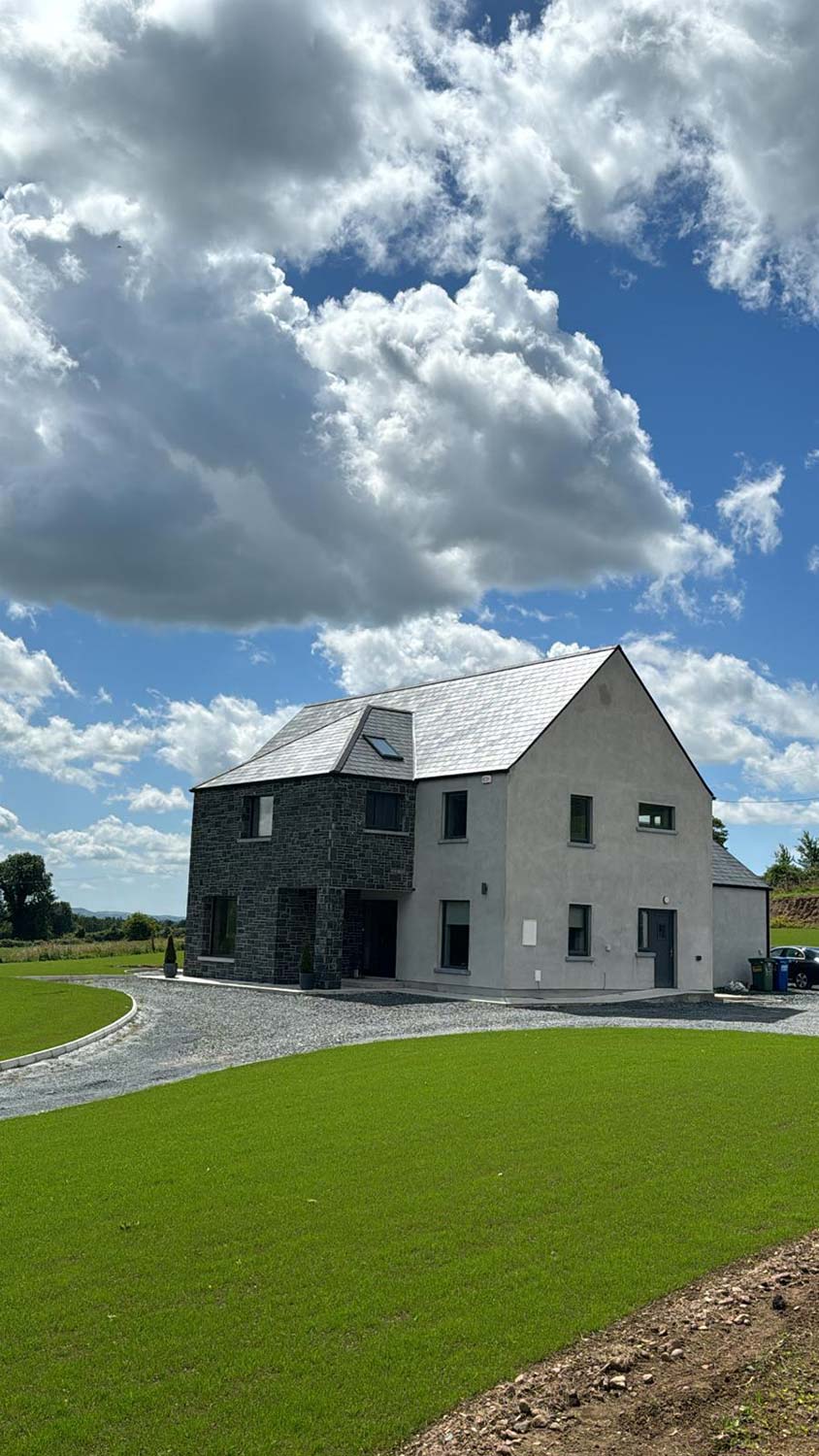
One of the biggest changes allows a detached auxiliary dwelling to be built in the rear garden of certain homes without a planning application.
The new dwelling must be between 32sqm and 45sqm and connected to the water, wastewater and other services of the main house.
However, the exemption only applies to detached houses. The main property must also be the owner’s sole or main home when the work begins.
There are several other conditions. The garden dwelling:
- cannot be sold separately from the main house;
- cannot be divided off as a separate property;
- cannot be used for short-term letting;
- cannot be a caravan, mobile home or other temporary structure;
- cannot be higher than 4m with a tiled or slated pitched roof, or 3m with another type of roof;
- must leave at least 25sqm of private garden space for the main house;
- must be at least 0.6m from a wall or shared boundary;
- cannot have a separate water or wastewater connection;
- cannot require a new entrance onto the road.
There must also be independent pedestrian or wheelchair access to the unit within the property.
Homes with an on-site wastewater treatment system will need to make sure it can cope with the extra demand. The new unit cannot be built on an approved percolation area, and a second treatment system cannot be added under this exemption.
The council must be notified at least 14 days before work starts, and the project must be completed by December 31, 2030.
Other rules still apply
Not needing planning permission does not mean homeowners can simply start building without checking the other requirements.
Building Regulations, fire-safety standards and building-control rules still apply. These are particularly important when turning one house into two homes or constructing a new building that will be lived in.
The 14-day notification is not the same as receiving planning approval. Homeowners must confirm that their property and proposed work meet every condition attached to the exemption.
Anyone who is unsure should consider getting advice from an architect, engineer, planning consultant or solicitor before starting the project.
Tax details still to be worked out
The tax position for back-garden dwellings has not yet been confirmed.
The Department says the issue, including whether Rent-a-Room relief could apply, will be considered as part of this year’s Budget process. Any changes needed would then be included in the Finance Bill.
Until that is clarified, homeowners should not assume that rental income from an auxiliary dwelling will automatically qualify for Rent-a-Room relief.
However, according to RTE.ie housing charity Threshold has warned that people renting back-garden homes could fall outside the protections of the Residential Tenancies Act. In a submission to the Oireachtas Committee on Housing, the charity said it is concerned that the rules risk creating “a new category of renter” without security of tenure, protection from excessive rent increases or access to the Residential Tenancies Board.
Threshold has called for stronger safeguards, particularly for vulnerable groups including older people, warning that the exemption could lead to legal uncertainty and leave some residents in precarious living arrangements.