In this article, we cover:
- What plug-in solar panels are and how they work
- How much they cost and what you could save
- Current rules and electrical safety requirements in Ireland
- What happens to surplus electricity
- Whether plug-in solar panels are suitable for renovations and new builds
The Irish government is aiming to make plug-in solar panels available for use in Ireland by next summer, potentially offering homeowners a cheaper and more accessible way to generate their own electricity.
Minister for climate, energy and the environment Darragh O’Brien said he is targeting the end of Quarter 2 (June) 2027 for the introduction of the technology, subject to the necessary regulatory and electrical safety measures being put in place.
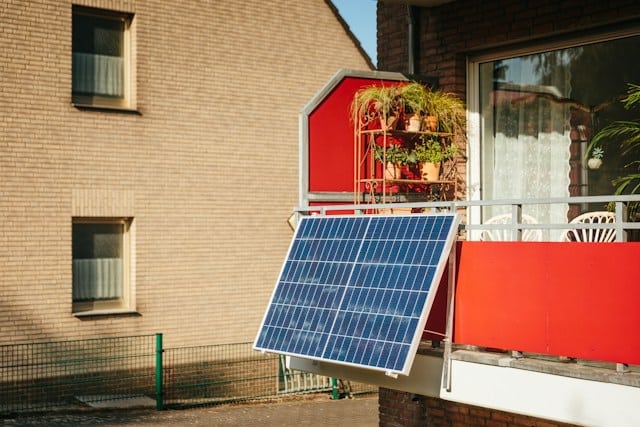
Already popular in countries such as Germany, plug-in solar systems typically consist of one or two small solar photovoltaic (PV) panels and an inverter, which converts the electricity generated into a form that can be used in the home.
Unlike conventional rooftop solar installations, which involve several panels permanently mounted on a roof, these smaller systems can be positioned on a balcony, in a garden or in another suitable outdoor location.
Once the necessary regulations are introduced, approved systems could be connected directly to a household electricity socket, allowing homeowners to use some of their own solar-generated electricity without the expense of a full rooftop installation.
The government outlined its support for accelerating the introduction of plug-in solar in a written parliamentary response in September, describing it as a potentially “cost-effective and accessible option” way for households to reduce electricity bills.
How much could homeowners save?
While plug-in solar panels are considerably smaller than conventional rooftop systems, they could still help households reduce their electricity bills.
Speaking on RTÉ’s Morning Ireland on November 6, professor Lisa Ryan, professor of energy economics at University College Dublin, explained that the systems commonly used in Germany have an output of around 800 watts.
Although this is far below the generating capacity of a typical rooftop solar installation, she estimated that a small plug-in system could potentially meet around 10 per cent of a household’s annual electricity needs, saving approximately €150 a year.
With systems costing in the region of €500 to €600, professor Ryan suggested that homeowners could potentially recoup their investment in around three to four years.
However, actual savings would depend on factors including the location and orientation of the panels, the amount of sunlight they receive, electricity prices and how much of the power generated is used within the home.
The panels generally don’t include battery storage, meaning households would benefit most from consuming the electricity as it is generated during daylight hours.
Asked whether the technology would be the “game changer” suggested by minister O’Brien, she replied: “No, I wouldn’t really say it’s a game changer.”
But she welcomed the potential for smaller systems to help households tackle high electricity bills, particularly when combined with other energy-saving measures.
What are the current rules in Ireland?
Although plug-in solar technology is already available in other European countries, Ireland has yet to introduce the regulatory framework required for householders to connect these systems directly to ordinary electrical sockets.
Under the current ESB Networks microgeneration rules, grid-connected solar PV systems must be installed by a registered electrical contractor and notified to ESB Networks through its NC6 microgeneration process.
Suitable smaller systems can be installed under that process, but they must be hardwired rather than simply plugged into a socket.
The government is now examining how these requirements can be simplified for plug-in systems while ensuring they can be used safely.
A working group put together by ESB Networks earlier this year has been examining electrical safety, product standards and registration requirements.
The group submitted its report to the department of climate, energy and the environment in October, identifying a possible pathway for the introduction of the technology, subject to further safety assessment and legislative review.
An output limit of 800 watts is among the measures being considered, along with a simplified registration process that would allow ESB Networks to keep track of devices connected to the electricity network.
During an Oireachtas committee discussion on plug-in solar in July, concerns were raised about the suitability of older household wiring, the operation of protective devices and the potential for electrical circuits to overheat.
The final requirements have yet to be confirmed, meaning homeowners shouldn’t assume that foreign bought plug-in systems can currently be connected to a standard Irish household socket.
What happens to excess electricity?
Unlike some larger rooftop solar PV installations, small plug-in systems won’t necessarily include battery storage. This means the financial benefit will largely depend on how much of the electricity generated can be used within the home.
Under Ireland’s existing Clean Export Guarantee arrangements, eligible households with registered microgeneration systems can receive payments from their electricity supplier for surplus electricity exported to the national grid.
However, it hasn’t been confirmed exactly how these arrangements will apply to the proposed plug-in solar category.
Are plug-in solar panels suitable for renovations and new builds?
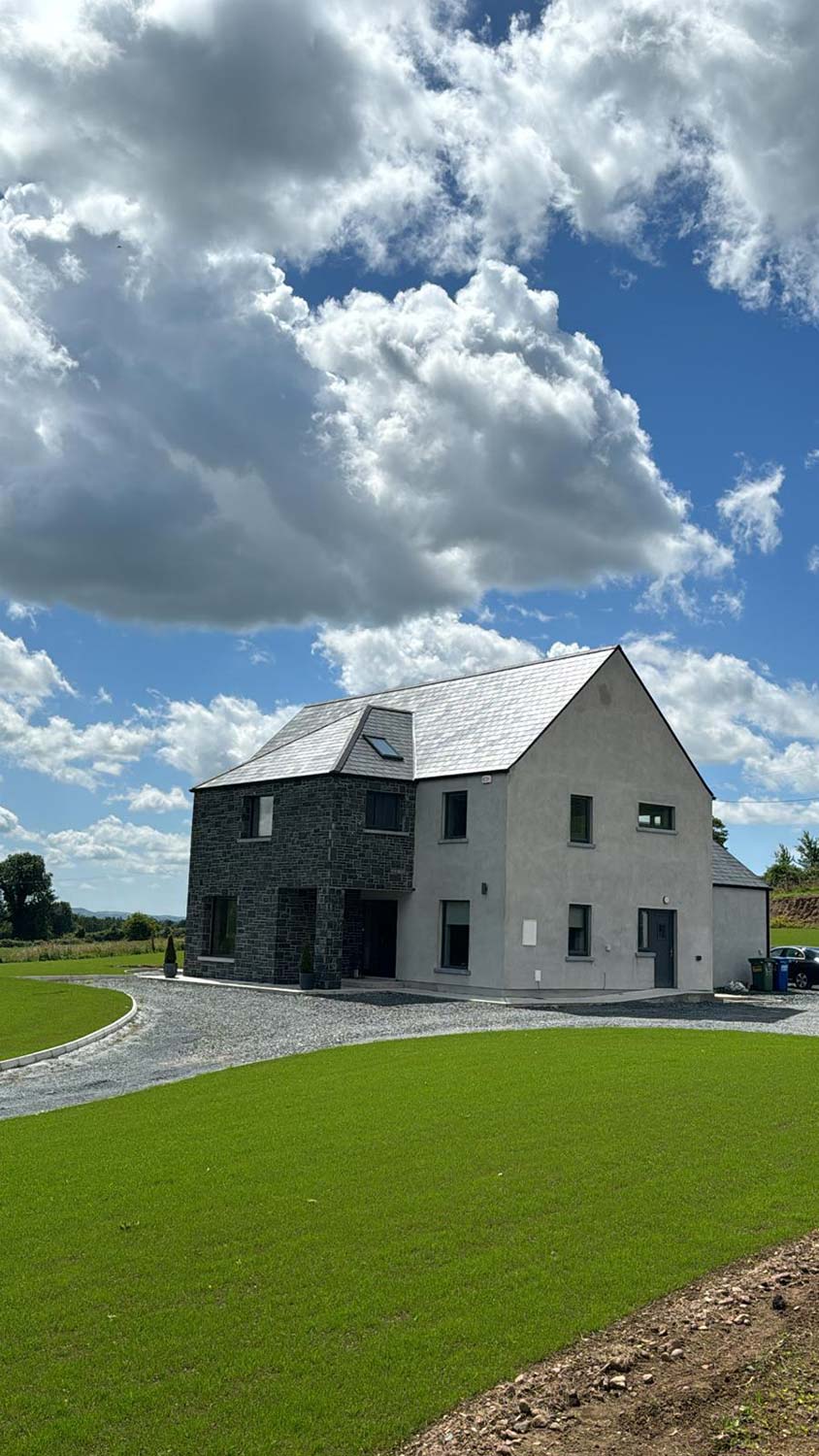
For homeowners carrying out smaller improvement projects, particularly where roof space is restricted or unsuitable for solar PV, a portable plug-in system could offer a straightforward way to generate some renewable electricity once the appropriate regulations are in place.
For those planning a major renovation, extension or new build, a full rooftop solar PV system makes more sense, particularly if the home has a heat pump or EV charger. Ideally, solar PV should be considered at the planning stage, but even if panels aren’t being installed straight away, it’s worth installing the necessary wiring and equipment to avoid extra work and costs later.
Unlike the proposed plug-in systems, eligible conventional rooftop solar installations can currently benefit from SEAI grant support of up to €1,800, although the standard grant isn’t available for newly built homes.