In this article we cover:
- What is humidity and what is a good level?
- Why our current approach isn’t working
- What to do to manage moisture in the home
- Design tips and how to manage an existing damp problem
I have a special interest in fungi and grow culinary mushrooms, so I always think of a line from microbiology which says that everything is everywhere; it’s the environment that selects what will flourish.
Mould spores exist in every home. Whether they grow depends entirely on the indoor environment. Black mould tends to appear when a surface falls below about 12 to 13 degrees at normal humidity levels.
Passive House design keeps all surfaces above roughly 17 degrees specifically to avoid this. Warm surfaces and controlled ventilation prevent mould far better than any chemical you can apply.
Moisture issues are always building performance issues. They are signs that something is not working properly and the long term solution is always environmental. Ventilation, warm surfaces and appropriate materials are essential.
Never assume that plastic based insulated plasterboard will fix damp in an old house. It rarely does. Treating mould is temporary. Fixing the environment is permanent.
The industry standard
The industry has approached mould and damp the same way for decades. The priority was, and often still is, to make walls look clean and finished rather than to understand the cause of the problem.
What I see repeatedly is that many architects and builders still specify wall build ups that do not suit older buildings. The understanding of moisture behaviour is often incomplete, and well intentioned upgrades end up trapping moisture, hiding decay and creating mould that always comes back.
Retrofits are often where moisture issues become most visible. Older buildings were never designed to be sealed up. They relied on small gaps, chimneys and loose windows to release moisture naturally. When insulation is added without understanding how the building handles water vapour, the result can be far worse than what was there originally.
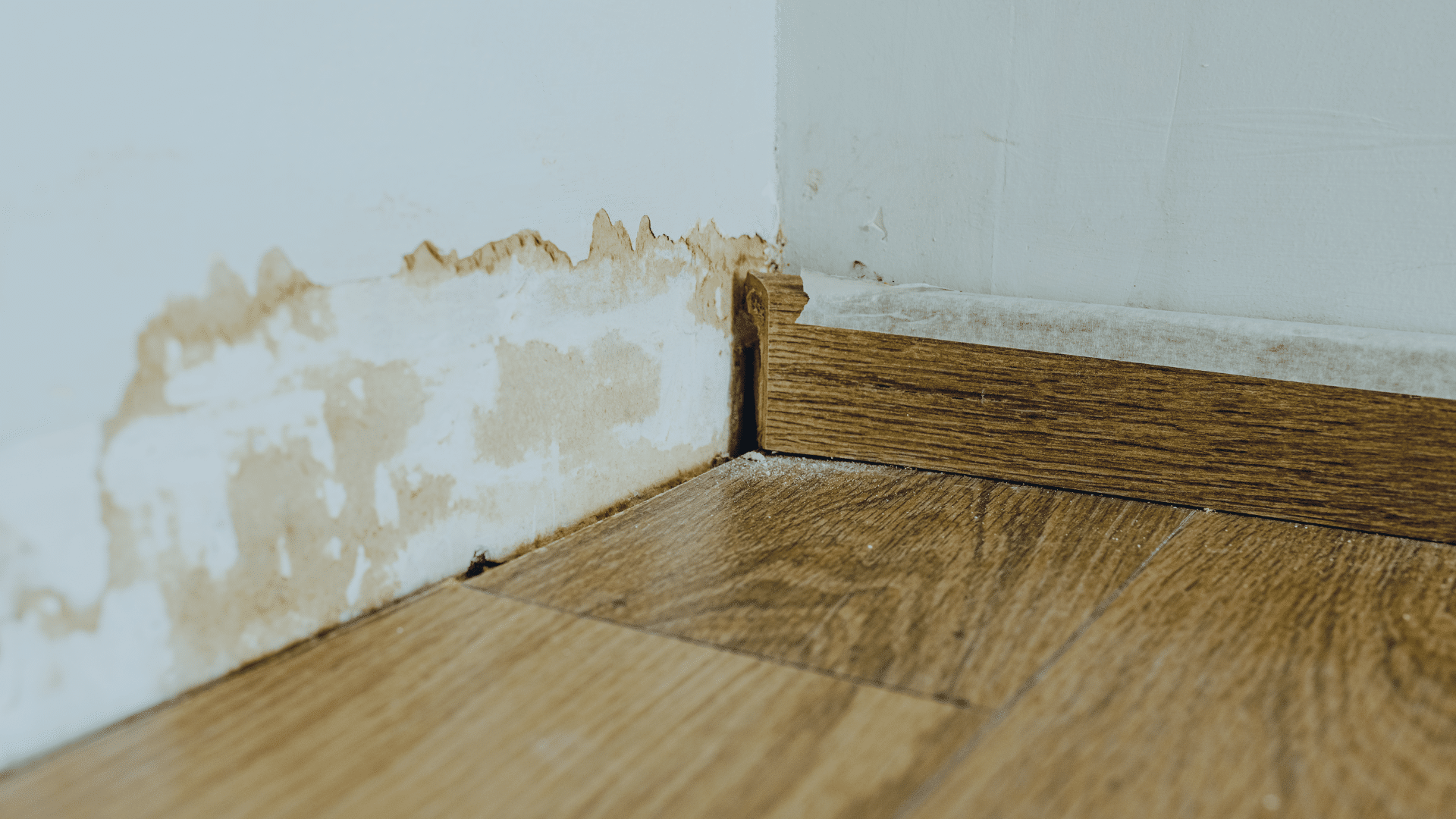
One of the most damaging and widespread mistakes I come across is the internal dry lining of solid walls with plastic based insulated plasterboard, including foil backed boards. This remains the standard approach on many projects.
On paper it looks neat and convenient. In reality it traps moisture between the original wall and the vapour-tight lining. There is almost no ability for that moisture to escape. It becomes a quiet, hidden environment where mould thrives.
Some try to ventilate the cavity behind the insulated plasterboard by adding small vents to the outside. In theory it sounds sensible. In practice it is rarely carried out correctly and often leads to excessive heat loss. It is not a reliable or efficient solution.
What’s the optimum level of humidity?
The optimum indoor humidity is about 40 to 60 percent and fresh air is roughly 30 cubic metres per person per hour, which is why Passive House specifies these conditions to avoid dry air irritation and the health and mould risks that come with excess moisture.
Airtightness and ventilation
Airtightness gets blamed over and over again for moisture issues, yet airtightness itself is not the culprit. The real issue is the lack of proper ventilation and the confusion between airtightness and breathability. They are completely different ideas, and mixing them up leads directly to the same moisture problems in both new builds and traditional houses.
Both ROI and NI regulations now require airtightness testing, yet they still do not require proper mechanical ventilation. A house can achieve an excellent airtightness score while relying almost entirely on trickle vents to keep the air moving. That is not a ventilation strategy. It is guesswork.
One question I am asked constantly is whether a new build should include a heat pump. Heat pumps are incredibly efficient, but for me they are far less important than having a proper ventilation system.
Ventilation protects the comfort, the health and the fabric of the building. Heating only adds heat. Without proper ventilation you are heating damp air and encouraging moisture to settle on the coldest surfaces.
Mechanical ventilation with heat recovery, MVHR, is what ties everything together in a new build. It provides continuous fresh air, keeps humidity stable, retains heat and ensures every internal surface stays warm enough to avoid mould. It is one of the most important components of a modern, airtight home.

How to prevent mould build up
If you are insulating a solid wall internally, breathable materials such as wood fibre insulation, insulating lime plasters and breathable paints are the safest options. They allow moisture to move and dry naturally and greatly reduce the risk of condensation. These approaches cost more, but they protect the building and the people living in it.
Ventilation solutions for retrofits require a different approach than in a new build. Full MVHR can be difficult because ducting needs continuous routes. Fortunately there are effective alternatives.
Decentralised MVHR units, which work room by room, tackle moisture at its source and recover heat surprisingly well. They are very effective even if the name does not lend itself to marketing.
There are also small attic based MVHR systems that sit in the roof space and use short ducts to serve the rooms below. Centralised MVHR is the most efficient of the three, often recovering around 80 to 90 per cent of heat, decentralised MVHR units recover less, and attic based systems sit somewhere in between with a balanced performance that suits many retrofits.
Attic based systems sit between the full system and decentralised units and can work very well for many retrofit projects.
Quick fixes:
To prevent moisture building up in your home, there are practical habits that anyone can started immediately. These include:
Reduce steam from cooking and showers.
Avoid drying clothes indoors when possible.
Pick one consistent time each day to open windows for fifteen or twenty minutes because a daily purge works far better than random ventilation. The longer you can leave them open the better, but it has to be balanced with your heating strategy and indoor comfort.
If mould has already reappeared:
Strip paint & clean with Hydrogen Peroxide
↓
Treat with Benzalkonium Chloride
↓
Finish with Anti Mould Paint
Improving the environment is key to lasting results