In this article we cover:
- Homeowner story of why he chose to include solar panels in his new build
- Specification including PV and heat pump costs
- Consumption data with explainers
- Rate of self-consumption and how that compares with a more optimal scenario
- Floor plans, timeline and supplier list
Overview
Plot size: 1.5 acres
House size: 3,000 sqft
Heating: air to water heat pump
Ventilation: centralised mechanical with heat recovery
Build method: traditional block build
EPC (SAP): A (97)
PV and heat pump installation cost: £12,000.
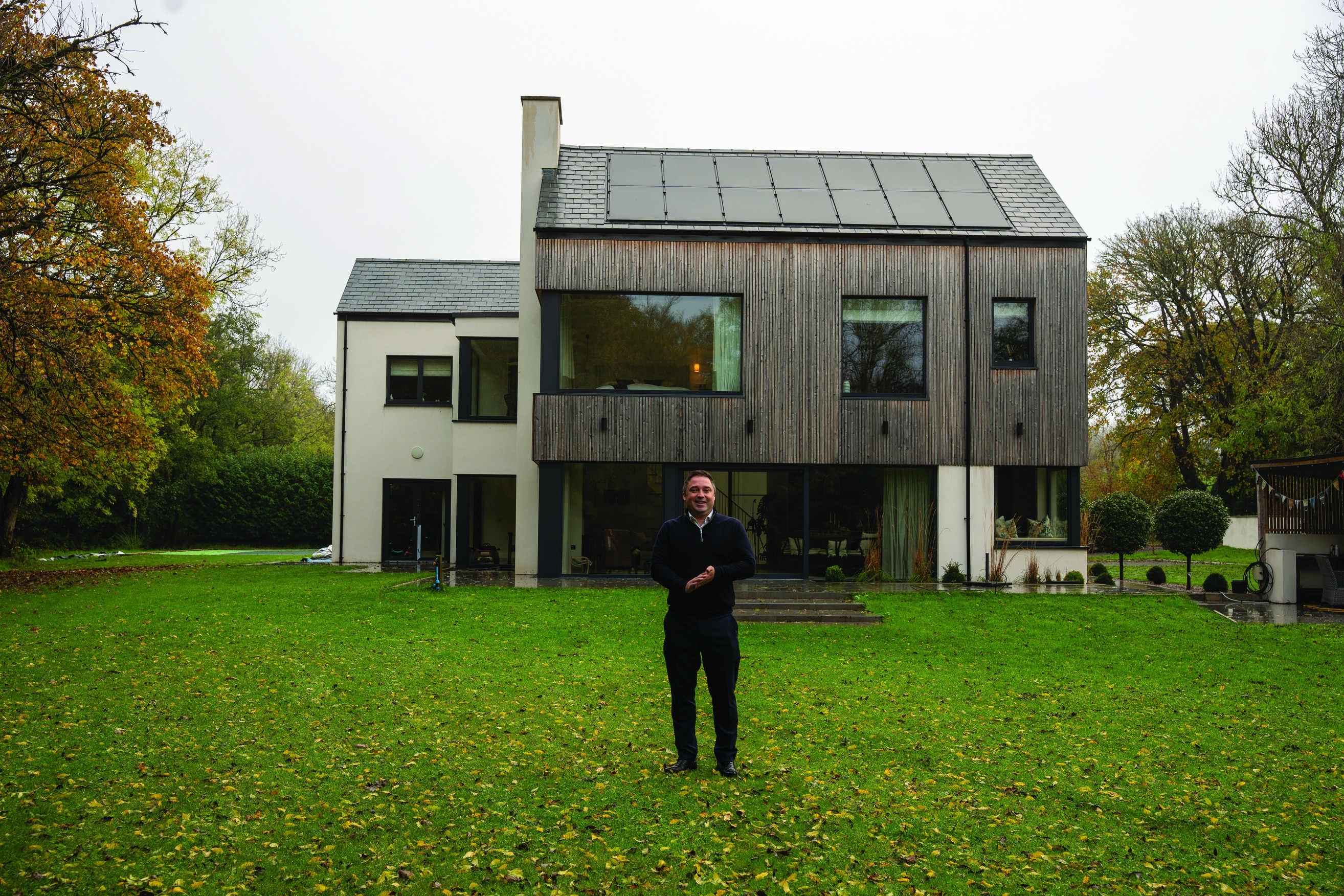
Nick Finlay’s house in Co Fermanagh couldn’t be in a better location; surrounded by mature trees beside a flowing river, it’s the perfect setting for a contemporary home.
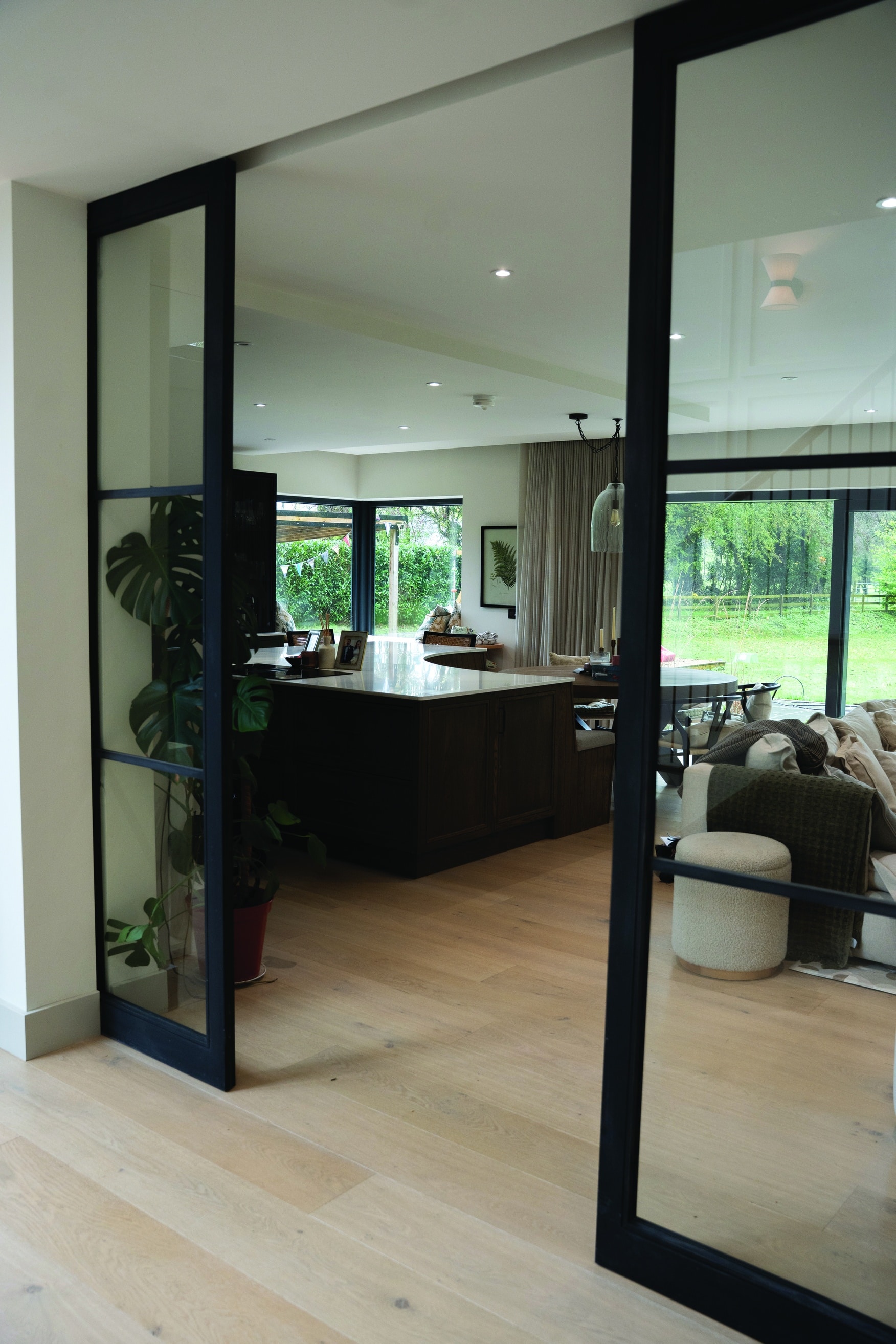
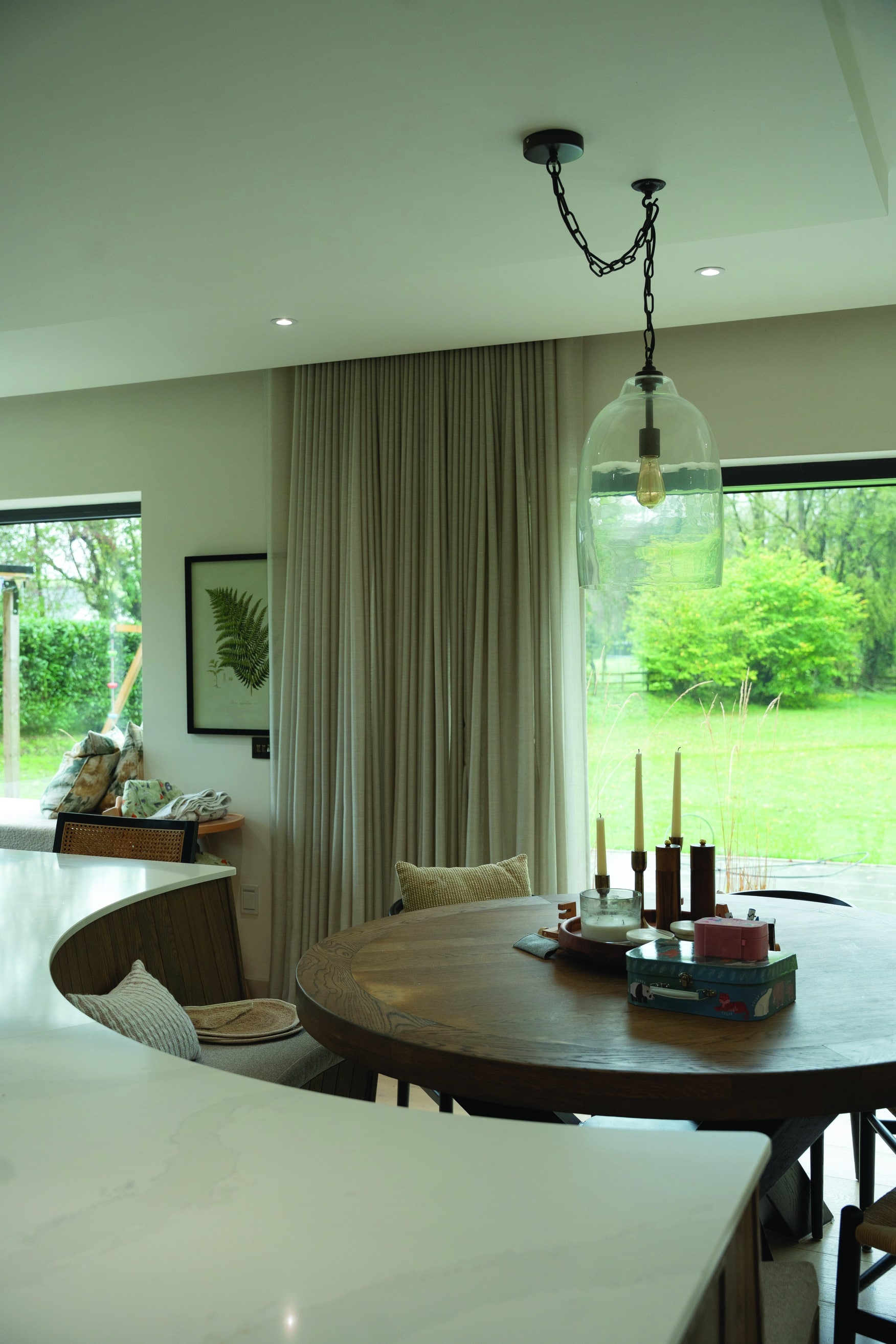
From the outside it’s strikingly modern and inside, the warm and inviting interiors instantly make you want to settle in, pour a coffee, and watch the sunshine through the rain. For Nick, building a home is in his blood. Growing up, he was captivated by construction; his father built several houses and nurtured a love for the craft.
After 10 years working as a quantity surveyor, and now working with the family estate agency, Nick was ready to take the plunge into self-build. This project was his second. “I really enjoy the process,” he says. “My dad project managed the build, bringing in trades. My wife found this plot, and as an estate agent, I’ll never hear the end of it,” he laughed.

Building Fabric
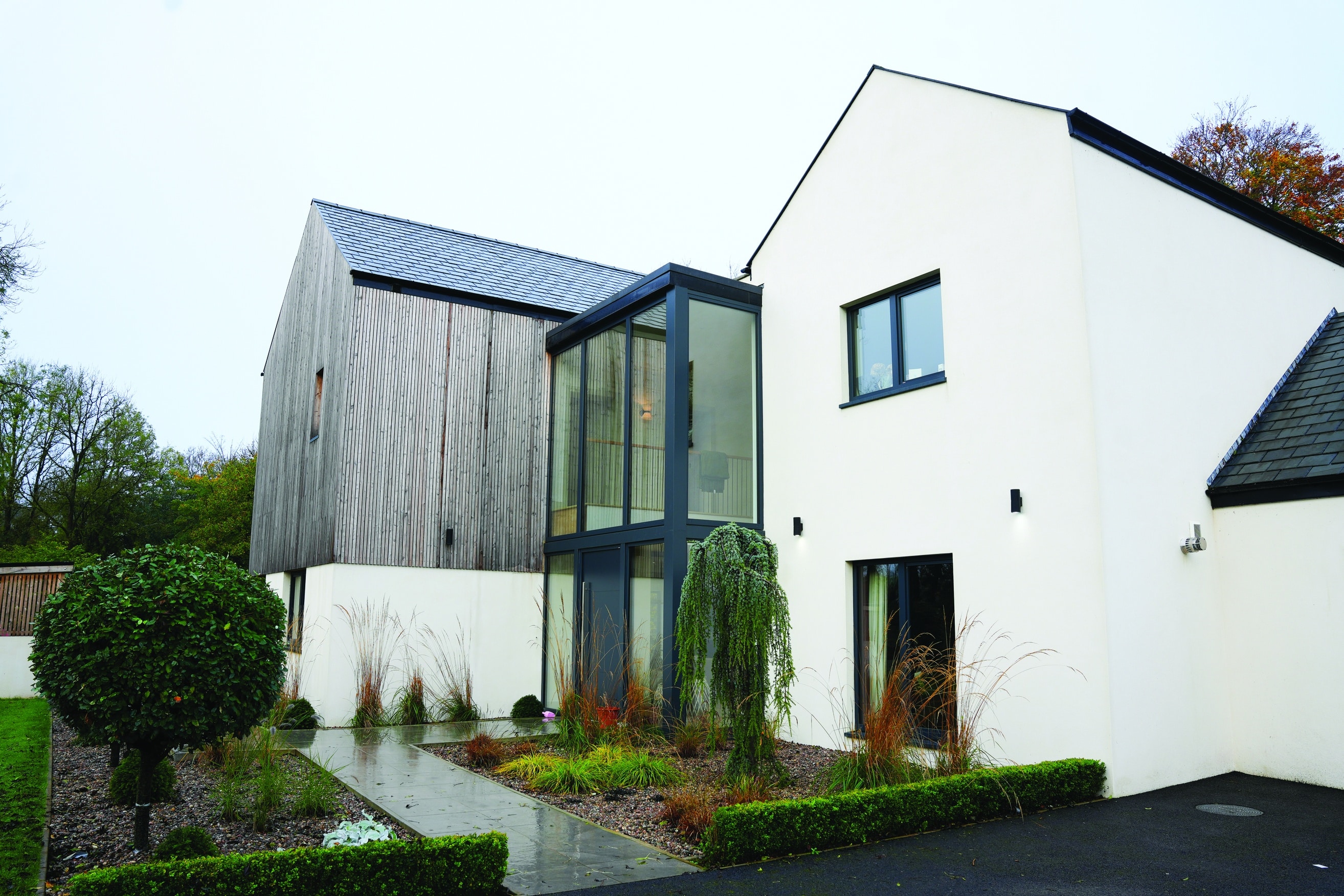
The house blends contemporary design with meticulous attention to energy efficiency. In fact Nick’s passion for renewables played a key role in shaping the build. “As part of my degree, I studied renewable energy, and my uncle, who is an architect, gave great advice on focusing on the fabric of the building,” he explains.
“Investing in insulation, airtightness, and triple-glazed windows ensures the house is energy efficient and will pay off in the long run.”

Solar System
A central element of that strategy was installing photovoltaic (PV) panels and a heat pump. Having worked with their renewable’s supplier before, Nick knew their expertise would be invaluable. “They guided us on what could be implemented.
With the house already highly airtight and efficient, the solar panels take the edge off running costs,” he says. Selecting the right renewable technology involved careful research. Nick explored tidal, geothermal, and wind options, but solar proved the most suitable for this location.
“We’re really pleased with how it turned out. The combination of insulation, air sealing, and solar panels makes it very easy to run,” he notes. The installation process itself was seamless, because they involved the company early. “Early involvement allowed for a flush, neat finish on the roof. The process was stress free.
They’ve also been excellent in servicing the heat pump,” says Nick. He’s confident in recommending this approach: “The best advice is to spend on the fabric of the building first: insulation, glazing, airtightness.
Then add technologies like solar panels to take the edge off long-term running costs.” Reflecting on the build, Nick acknowledges a few small tweaks he might make in the future. With the house so airtight and energy efficient, solar gain can push indoor temperatures up on warmer days, so an air conditioning unit could be beneficial.
Expert Opinion
Because this home already has a very high energy efficiency rating, the opportunities for Nick are to increase his generation and self-sufficiency.
Increasing his solar array to 10kWp and adding 20kWh of battery storage would enable more self-generated consumption (see next page for analysis). If Nick considers an electric vehicle (EV) in the future, his expanded array would mean his car would become another energy store for his home and run on free energy.
Nick mentions solar heat gain in his property. Finding out things like this come from lived experience, and I would suggest retrofit measures for his home might include automatic blinds or adaptive heating controls. For a new build, orientation of the property, and therefore the heat gain potential, is worth considering with your installer.


Payback Period
Nick expects the solar to pay for itself in around six years; in fact from May to September he’s generating about the same as he’s consuming in electricity. “Our next step would be to add a battery to charge overnight on night rates, the savings would be even greater,” he says.
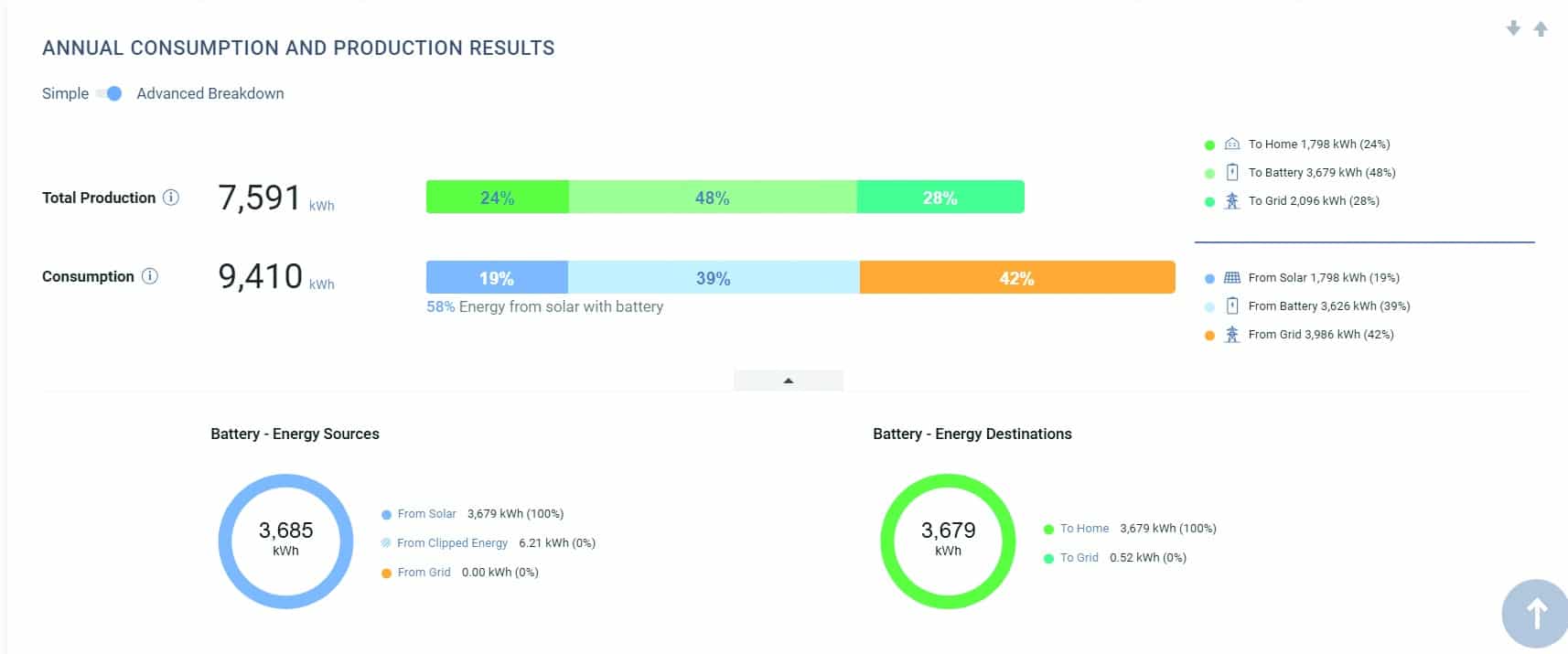
In a scenario with a notional battery added (array increase to 10kWp and 20kWh battery, at an additional cost of approx. £10k) would see the house moving from 28 per cent self consumption to 58 per cent, as the battery allows both excess solar and night-rate battery charging.
For anyone considering a self-build, Nick has one piece of advice: “You’ve got to live and breathe the process. Research every detail, talk to people who’ve done it before, and take their knowledge on board.”

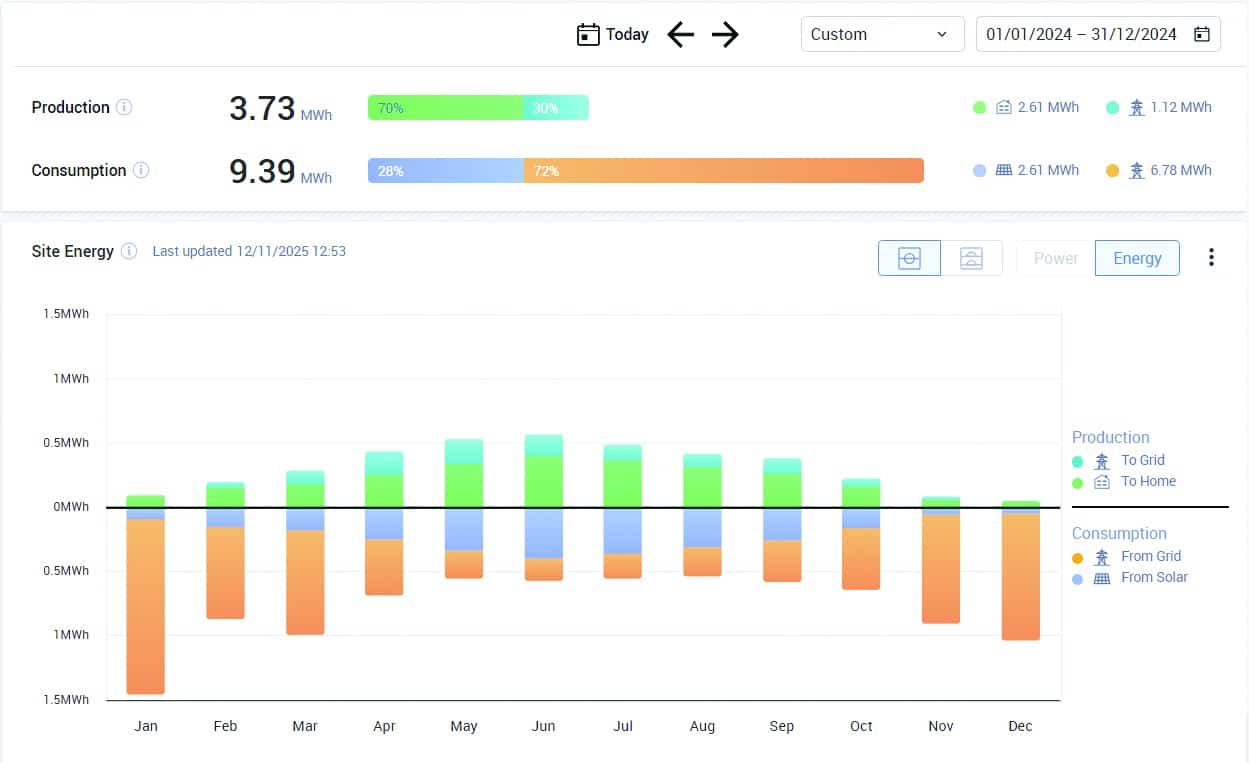
Actual PV energy production and consumption (28 per cent self-consumption)
This consumption and production profile is real data, based on Nick’s 5.18kWp array, gathered in 2024 (full calendar year from Jan 1 to Dec 31).
Optimal scenario for Nick’s house (58 per cent self-consumption)
This consumption and production profile shows how Nick’s production and consumption profile would change with an array increase to 10kWp and a 20kWh battery set-up.
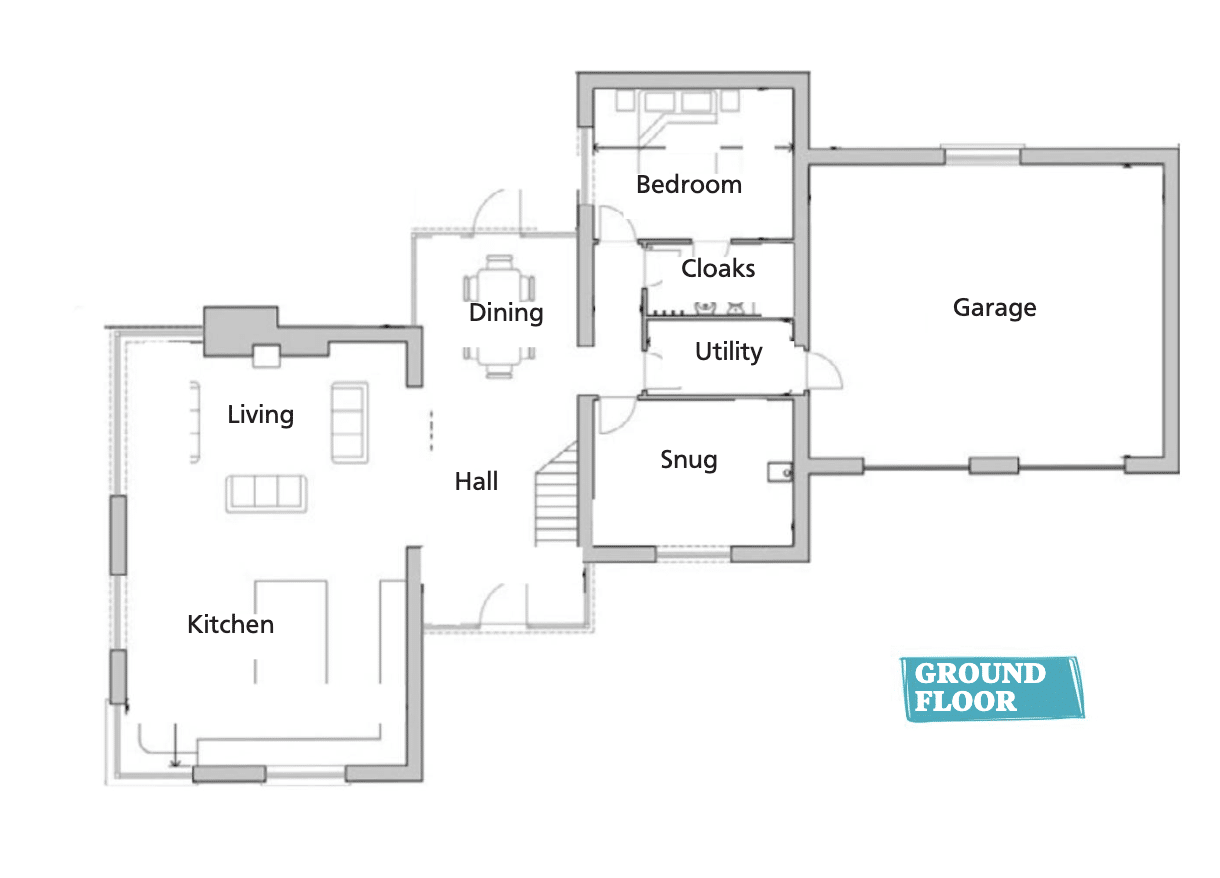
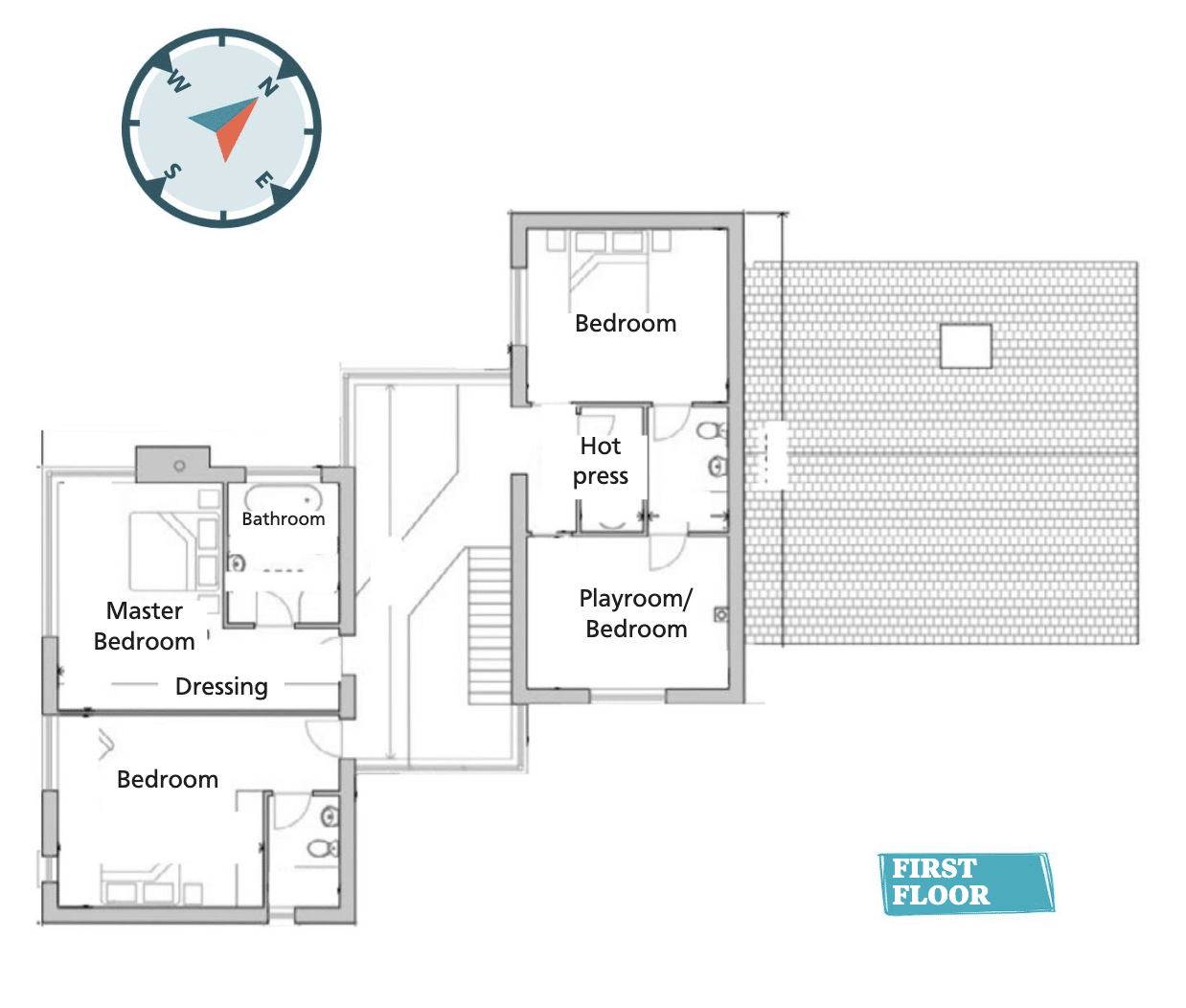
Floorplans
Suppliers
Architect: Alan Curren Architects
Ventilation: BEAM, beamcentralsystems.com
Renewables: Full solar system and Mitsubishi air to water heat pump installed by Future Renewables, futurerewables.net
Spec
Walls: 150mm cavity walls fully pumped with EPS beads, U-value 0.13W/sqmK
Floor: Standard solid floor build-up with underfloor heating, U-value 0.11W/sqmK
Roof: Metal standing seam warm roof with standard build-up, U-value 0.12W/sqmK
Windows: triple glazed, overall U-value 0.6W/sqmK
Solar Components
5.18kWp SolarEdge PV system
To divert excess electricity: myenergi eddi water heater